Categories
Engaging reluctant readers Reading for pleasure Uncategorized

The Hidden Benefits of Funny Books for Kids

Why should children read funny books?

1. Comedy provides a welcome escape from the chaos of the world

Who doesn’t sometimes just need a good old belly laugh?

2. Humour helps children cope

These days, funny books for children are way more than fart jokes and toilet humour. They often carry profound and deep messages, introduce young readers to meaningful or sensitive topics, and help them to navigate difficult situations.

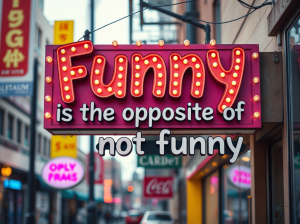
As many writers of funny books might tell you (and, yes, I am one of them), ‘funny’ is the opposite of ‘not funny’, not of ‘serious’.

In other words, something can be both funny and serious at the same time. 

Without doubt, it is the author building trust with a reader through humour that allows for exploration of more sensitive issues.

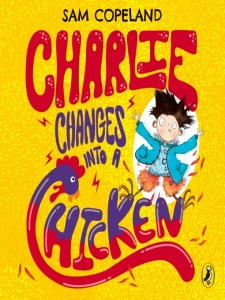
In the hilarious book, Charlie Turns Into A Chicken, by Sam Copeland, Charlie turns into different animals when he’s feeling anxious. And one of his main anxieties comes from the fact that his brother has cancer.

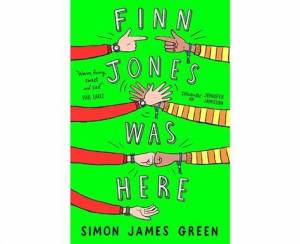
In Finn Jones was Here, by the talented writer, Simon James Green, themes of grief and death are explored through humour.

3. Laughter really can be the best medicine

A good old giggle can help counteract feelings of anxiety in children. Don’t just take my word for it, listen to scientific fact: 

Laughing produces endorphins. These ‘happy hormones’ promote a sense of well-being and help relieve stress. Similarly, when we smile, levels cortisol (a stress hormone) are reduced. 

So, reading a book that makes you smile or laugh, is truly beneficial for emotional well-being.

4. Sharing funny stories improves human connections

Whether through a shared read in class, or a bedtime story at home, when you laugh together, you bond better. Bonding over laughter develops trust which leads to open communication.

Reading a funny book can break down barriers and open up conversations. Once at ease, children speak more easily about sensitive topics.

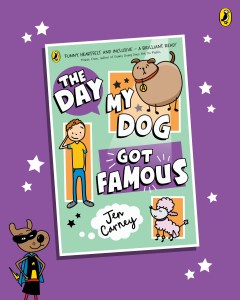
A teacher once contacted me to tell me that reading The Day My Dog Got Famous as a class reader had led to a brilliant discussion about different kinds of families, led by a child who’d lived with a foster family for a while before being adopted by two mums, just like Ferris’s.

PS the endorphins produced through laughter also promote better sleep! Winner winner.

5. Funny books can be empowering and reassuring

Humour can help children feel more comfortable, face fears or try something new. Seeing characters slip up, get into muddles and experience similar anxieties to their own can be reassuring.

Learning to laugh at yourself is a great life skill.

6. Funny books have the power to help children fall in love with reading

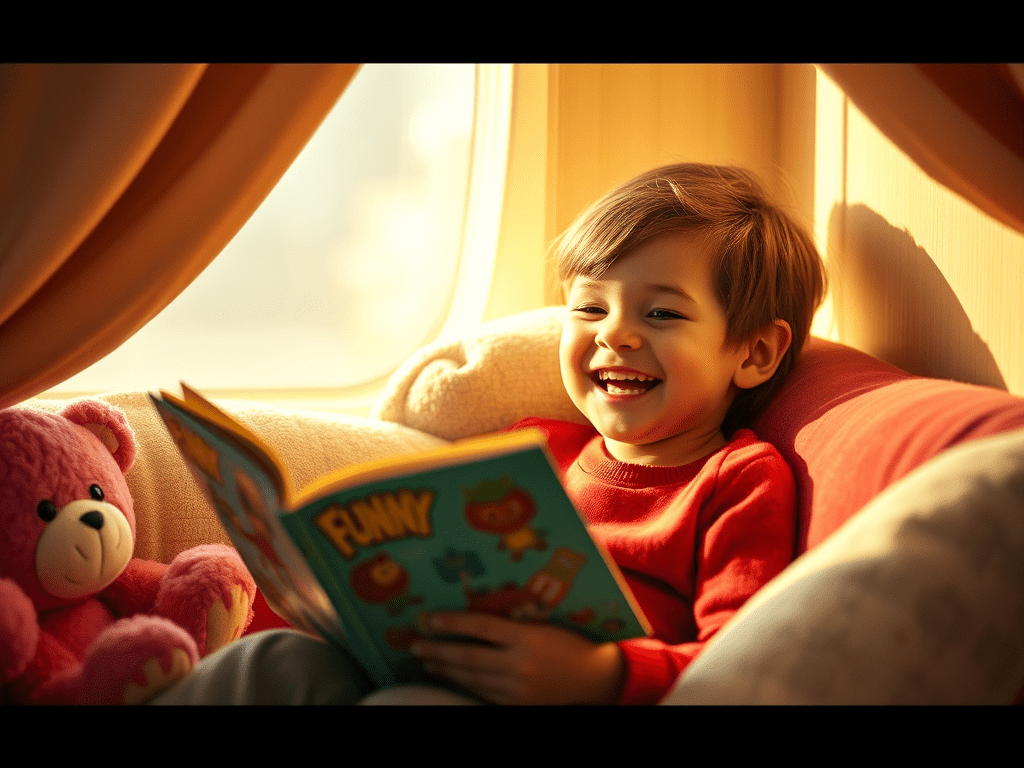
If a child associates reading with laughter and fun, they will have more chance of falling in love with reading.

Finding a funny book that hooks a child will entice them to read the whole series. Wimpy Kid, Loki, Dog Man – all very funny book series that have made children into readers.

PS Finding books that help children to read for pure joy is vital given that ‘reading for pleasure’ in childhood is evidenced to increase a child’s likelihood of achieving their potential in life.

7. Some funny novels have the power to compete with screens

The pay-off of a good laugh can be attractive enough to take a child away from a screen!

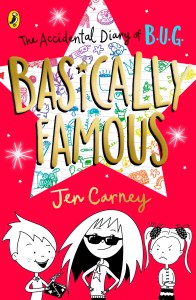
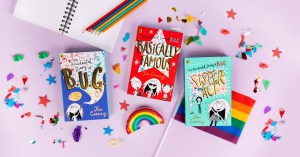
I’ll never forget the message I got from a parent who told me her son had CHOSEN to read Basically Famous instead of going on his PlayStation one evening.

And my own daughter will drop everything if there’s a new Lottie Brooks book out.

Less screentime = better mental health, in my opinion.

8. Funny books are brilliant teaching tools

We tend to remember things that make us laugh, so funny stories are brilliant for enhancing comprehension skills.

Funny books often contain moral dilemmas, so they improve social and emotional skills, and promote good decision making.

Puns, alliteration, word play, amusing similes…funny books contain them all, helping children to understand nuances of language.

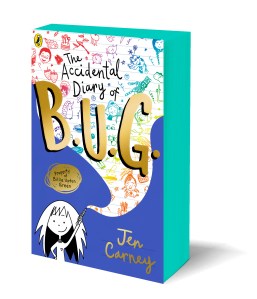
In The Accidental Diary of B.U.G., through masses of belly laughs, children are introduced to same-sex parenting and adoption – an excellent resource for PSHE/RSE lessons in primary schools when learning about different families.

I’d love to hear your thoughts. Do you have any other compelling arguments as to why children should read funny books?

Categories
Engaging reluctant readers The Accidental Diary of B.U.G. Uncategorized

Why is The Accidental Diary of B.U.G. series so interactive?

When I was writing The Accidental Diary of B.U.G., I had my own son in mind. Overwhelmed by books that were just pages and pages of just text, he’d quickly lose interest. He liked books with illustrations, but even those weren’t always enough to keep his interest.

That’s why The Accidental Diary of B.U.G. series is packed with things to do.

The distractions are within the book. They’re all relevant to what’s going on in the story, and they all involve reading. Sneaky, hey! Yes, but also effective!

Here are just a few examples:

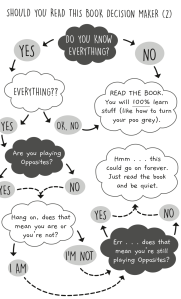
Fun decision-makers

Children have said they love working their way through these. Some even make their own up after seeing one in a chapter, so they go on to practise writing and logical thinking too. 😊

Biscuit Laws!

Biscuits are one of the series’ less-serious themes (although, as a biscuit-lover myself, I could argue that this is a VERY serious series-spanning topic!).

This picture shows the first five laws Billie and her TOBLA (The Official Biscuit Law Association) pals invent, but more are added as the series continues. Not only do children love reading these, they like debating their merits, trying them out and writing their own.

Games to try

The Accidental Diary of B.U.G. describes a lot of games that Billie plays in class and with her friends. As well as reading the rules, children can test them out which usually involves giving clear instructions to their friends.

Drawing activities

There are lots of drawing activities peppered through the series. Like the example below, many involve a bit of reading!

Bonus Blog content!

I love games. I’m a fan of playing games during long car journeys.

Here are five of my favourites that don’t require any equipment.

Try them on your next journey and see how quickly time passes! (Or, if games aren’t your thing, why not listen to a fun audiobook? Here’s a link to mine! my audiobooks)

Fun games to play on a car journey:

1. FORTUNATELY, UNFORTUNATELY

(as played by Billie and her class in The Accidental Diary of B.U.G.)

Rules:

  1. One person says a sentence to start a story.
  2. The next person continues the story, but they must start with the word unfortunately – essentially describing something that hinders things.
  3. The next player continues the story, but must start with the word fortunately and, in doing so, try to rectify the unfortunate event that has just happened.
  4. This continues until it gets too silly or boring, at which point you start again, or try the next game.

Example:

PLAYER 1: Derek jumped into his car and began to drive to a theme park.

PLAYER 2: Unfortunately, he’d only been driving for five minutes when he got a flat tyre…

PLAYER 3: Fortunately, he had a pump in his boot.

PLAYER 1: Unfortunately, the pump was broken.

PLAYER 2: Fortunately, Derek was a member of the AA, so called for help and the tyre was soon fixed.

(TIP: It’s good to resolve things along the way like this so that the story can continue)

PLAYER 3: Unfortunately, when Derek arrived at the theme park, he realised he’d left his wallet at home, so couldn’t buy a ticket.

PLAYER 1: Fortunately, his friend, Mary, who he was meeting, lent him £20.

PLAYER 2: Unfortunately, the tickets were £30.

PLAYER 3: Fortunately, Mary also had a £10-off voucher which she gave to Dereck and they entered the park.

PLAYER 1: Unfortunately, the roller-coaster Derek really wanted to go on was shut due to strong winds.

PLAYER 2: Fortunately, Mary was a weather weaver and ordered ten minutes of calm, sunny skies.

(TIP: It’s fine to include a fantasy!)

(TIPThis game works best with three or more people. )

Here are some sentences to start your stories in case you’re struggling to think:

One sunny day, Laura went for a walk with her dog.

Jamil and Henry wanted to build a den.

Shannon really wanted an ice cream.

The pigs at Parr Farm were starving.

2. ANSWER THE QUESTION BEFORE…

(as played by Billie and her class in The Accidental Diary of B.U.G. Sister Act)

Rules:

  1. You play this two at a time.
  2. Player 1 asks player two a question.
  3. Player two doesn’t answer it verbally.
  4. Player 1 asks player 2 another question.
  5. Player 2 gives the answer to the first question.
  6. Player 1 asks another question.
  7. Player 2 answers the second question they were asked
  8. …and so on until you’re bored or achieve a hilarious result.

Example:

Player 1: What day is it?

Player 2: (no answer)

Player 1: What was the last thing you ate?

Player 2: Saturday!

Player 1: What is your sister called?

Player 2: Weetabix

Player 1: Who are you going to buy a present for today?

Player 2: Lucy…

Tip: a bit of fore-thought works well! 😉

3. THAT DRIVER IS…

Rules:

Take it in turns to look at the drivers of vehicles you pass and assign them an adjective using sequential letters of the alphabet.

Example:

PLAYER 1: That driver is amazing

PLAYER 2: That driver is boring

PLAYER 3: That driver is careful

PLAYER 4: That driver is dangerous

TIP: It’s okay to pass or ask for help!

SUGGESTION: Play alternative versions of this game like ‘That driver is called…’ or ‘I be he/she likes…’ in which you essentially play the alphabet game using topics of your choice.

Example:

PLAYER 1: That driver is called Adam

PLAYER 2: That driver is called Bilal

PLAYER 3: That driver is called Christine

Example:

PLAYER 1: I bet she likes apples

PLAYER 2: I bet he likes burgers

PLAYER 3: I bet they like Coronation Street

4. COUNTING CARS

A basic game that my children loved when they were young.

Rules:

  1. Each player picks a colour.
  2. You set a time for the game to end e.g. “when we reach junction 34”, or “at 10 past 11.”
  3. Everyone counts how many vehicles of their colour they spot during that time period.
  4. The winner gets a toffee.

TIP: I like to pick a rare colour like brown so I can have a little sleep while the children are counting their red, black and white cars!!

WARNING! This games tests children’s honesty.

5. SILLY REGISTRATION PLATE PHRASES

Rules:

  1. Consider the registration plate of a vehicle in front of you.
  2. Using the string of three letters, take it in turns to make up a silly phrase.

E.g. LS15 GDF as above

Player 1: Gary dances funkily

Player 2: Get dressed, Freddy!

Player 3: Great dozy farmers

Everyone votes for their favourite then you choose another car.

TIP: wait for a car without an X!

Are we nearly there yet?

Yes.

Boo, I was enjoying that journey…😉

Categories
Engaging reluctant readers Reading for pleasure

How can I encourage my child to love reading?

We all know reading is a fundamental life skill.

Many of us are aware that children who read for pleasure are more likely to be happier, have better mental well-being, achieve their potential academically, and develop skills like empathy and creativity. (If you’re interested, there’s more about this here on the Literacy Trust’s website.)

But what can YOU do to help your child LOVE reading?

How can you help your child see reading as a pleasure rather than a chore?

What can you do if your child insists they JUST DON’T LIKE reading?

Here are my top ten tips, drawn from experience as a mum, a children’s author-illustrator, a former leader of parent/carer baby/toddler story sessions, and an ex-KS2 teacher:

1. Start early

Introduce books when your child is a tiny baby, and make time every single day to share books with pictures.

As well as helping your baby to hear the rhythm of language, and develop speaking and listening skills, reading to your baby is a brilliant way to give them comfort, attention, stimulation and happiness. It also starts them on their journey to becoming a reader.

2. Establish reading as a habit

As your child becomes a toddler, keep reading aloud to them regularly. If you can, visit a library at least once a fortnight and borrow a wide selection of books. Most libraries allow you to borrow 20 books at a time for free! Pop along to story sessions and let your toddler see their peers enjoying books. For reading to become a loved habit, repetition is the key.

3. Extend the reading fun

Make-up (or Google) creative activities based around a book your child has enjoyed.

As a leader of community book-based toddler sessions, I found that arts and crafts, physical activities and games helped to maintain a love of books.

Here are six easy ideas to get you going:

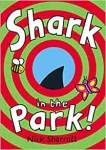
  1. Make the telescope from Nick Sharratt’s There’s A Shark In The Park.
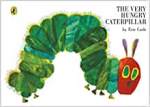
  2. Potato print Eric Carle’s Very Hungry Caterpillar.
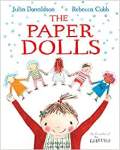
  3. Make some Paper Dolls after reading Julia Donaldson and Rebecca Cobb’s beautiful book.
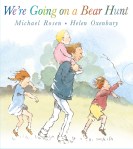
  4. Go on an ACTUAL Bear Hunt after reading Michael Rosen and Helen Oxenbury’s well-loved rhyming book.
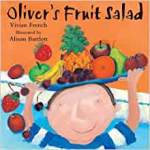
  5. Make a fruit salad together after reading Oliver’s Fruit Salad by Vivien French and Alison Bartlett.
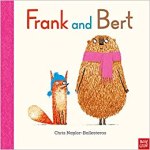
  6. Have a game of Hide & Seek like Frank and Bert in Chris Naylor-Ballesteros’s brilliant book.

4. Don’t get too hung up on your child’s school reading scheme

As a mum, I know this one well!

When your child starts school, if they ever appear reluctant to engage with their levelled reading scheme book, why not try to de-stress the whole ‘let me listen to you read’ situation by…

  • MODELLING (aka YOU read the book)

This approach, particularly if you can get your child to follow the text as you read, has huge benefits (and it’s certainly better than an argument/meltdown). You could even make purposeful errors. Not just for them to correct, but to show you’re not perfect either

  • TAKING TURNS

Start with a word each, then a sentence each, progress to a paragraph each. Try taking turns where one of you only has to read the dialogue. Eventually, take turns reading a page each. Always pile on the praise.

  • EMBRACING YOUR SILLY

Silly voices and different accents always go down well, but anything goes with this one as long as some reading happens! Can you read this while standing on your head? Try reading this sentence backwards.

  • RELAXING school’s ‘RULES’

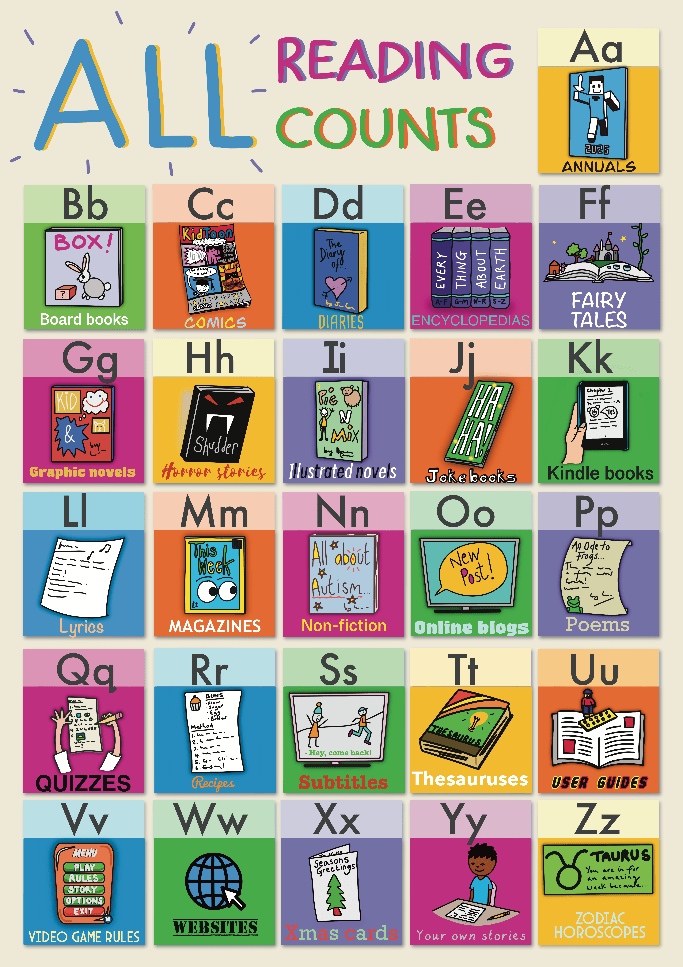
Forego reading scheme books now and then in favour of visiting the library, buying a comic/magazine to share, or introducing your child to a funny book you know will make them laugh (This was a game-changer for us – I’ve blogged about it here). Remember, variety is the spice of life and ALL READING COUNTS!

5. Let children choose their own books

I’m a firm believer in free choice when it comes to books.

So what if your child chooses a book that’s too hard for them? You can read it to them.

It doesn’t matter one iota if your child keeps choosing the same book, or the same author, or keeps picking books you believe are ‘too young’ or ‘too silly’ for them. Reading for pleasure is about free choice and enjoyment. Once a child develops a love for reading, I guarantee they’ll widen their preferences.

6. Find books that represent your child

Representation is a key factor in a child’s reading for pleasure journey.When a child sees themselves in a book (situations, families, heritage, appearances, identities etc.) they feel validated, and their self-confidence sky-rockets as they realise they’re not alone.

Find books your child can relate to and give them the opportunity to read them. (I’ve blogged about this in relation to rainbow families previously.)

7. Engage in Bookish chatter

Talk to your child about books and what they’re about. Ask your child what they did/didn’t like about a book. Let them speak freely so you get a real sense of what kind of books they are enjoying. Ask your child what they’d really love to read a story about, then research if one exists. (Twitter is a great tool for getting answers and recommendations.)

8. Find books that link to your child’s interests and hobbies

Whether non-fiction or a brilliant story, a child who loves football but hates reading, is more likely to read a book about football than a science-fiction book about a time-travelling porcupine.

If your child professes to dislike reading, but loves Minecraft or Lego or Roblox, find a book that aligns with their passion.

A child in a school I visited as an author recently spoke with passion about a book about F1 cars. Admittedly, he loved the pictures, but he was reading plenty of words too. And, importantly, enjoying reading.

9. When you know your child is capable of reading independently, don’t stop reading aloud to them

Every child is, of course, different. But, for as long as they’ll let you, read aloud to them at bedtime. This is your opportunity to introduce different genres, start conversations, laugh, cry, hide under the covers together! It won’t last forever, so my advice is to do it for as long as they’ll let you.

10. Be a reading role model

Visibly read for pleasure yourself. Not just at night in bed where no one knows you’re doing it.

And, to finish, four, ‘PLEASE DON’TS’ from me:

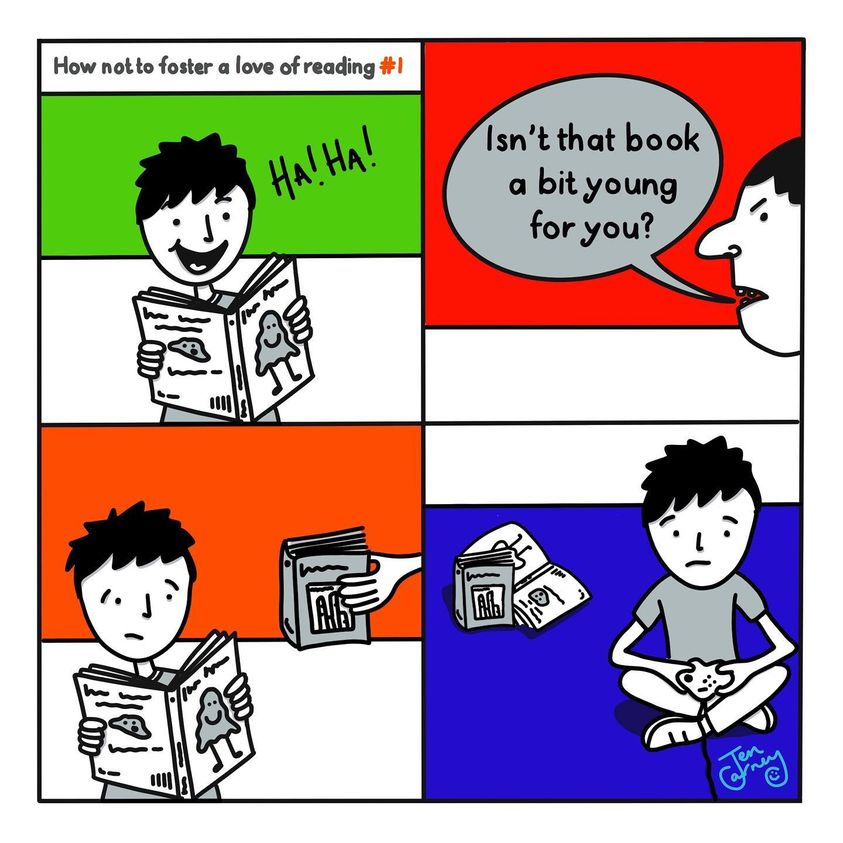
To avoid shattering confidence, please don’t tell your child they are ‘too old’ for a book.

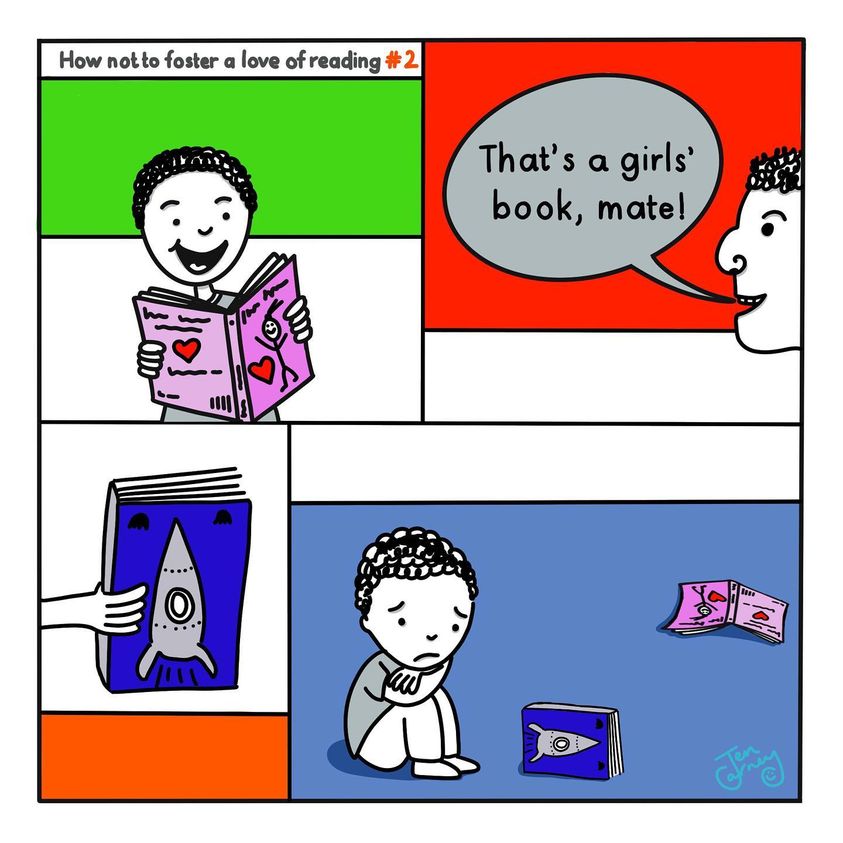
Whatever your personal thoughts, please don’t tell your child they’ve chosen a girls’/boys’ book.

When things get stressful (and I say this with particular regard to school reading scheme books) please don’t pile on the pressure or lose your temper.

However hard it feels, please don’t give up. If you’re reading this blog, you’re obviously doing your best and that’s all you can do.

Categories
Engaging reluctant readers Reading for pleasure

Why do your books appeal to reluctant readers?

I’ve received many marvellous messages from parents, guardians and teachers thanking me for igniting a love of reading in their reluctant readers. Such correspondence delights me, because it was my own son’s MAHOOSIVE reluctance to read that inspired the format and content of The Accidental Diary of B.U.G. series.

So, in brief, here are five reasons I think my books appeal to children usually disinclined to choose to read for pleasure:

  1. Early attention-grabbing content
  2. Short chapters easily finished in one sitting
  3. Dynamic content
  4. Laughter and jokes
  5. A relatable (and inspirational) protagonist

Allow me to expand…

  1. Early, attention-grabbing content

The first few pages of a book are important for all readers. For children disinclined to read for pleasure, grabbing and maintaining their interest in the initial pages is, perhaps, vital.

Will I read the rest of this book?

Where children who love to read might enjoy an atmospheric, descriptive build up, reluctant readers (my own son being a prime example of this) are inclined to abandon perfectly wonderful books if nothing has piqued their interest by page four.

Other people have commented on this aspect of my series:

“My 7-year-old is a hard sell… books have to grab him immediately. We could hear him laughing while he was in bed reading this. It’s a triumph. Thank you”

Parent

“I have an 8-year-old reluctant reader… hadn’t read anything willingly for well over a year… from page 1 I could see her interest piqued… Tonight when I finished reading to her, she took the book from me and read a couple of pages to herself whilst giggling at the content…It’s early days but you may just have got my lovely girl’s reading mojo back on track.”

Parent

2. Short chapters easily finished in one sitting

The feeling of accomplishment should not be under-estimated. I’ve never come across a child who wasn’t thrilled to have found a book they actually enjoyed reading. And a proudly announced, ‘I’ve finished A WHOLE CHAPTER!’ is a moment to be celebrated.

My daughter usually has to be bribed to read. The short chapters kept her going. She read this whole book without complaint and immediately asked me to order the sequel. Thank you.”

Parent

“Hasen has finished your book and absolutely LOVED it! Thank you so much for writing a book which has ignited a love for reading in some of my reluctant readers.”

KS2 Teacher

3. Dynamic content

For many so-called reluctant readers I have taught over the years, a full page of text was a real turn-off. Even if the story was gripping, even if I read the opening chapter to pique interest in a book I knew they could read and I thought they’d enjoy, some children (especially those who were also struggling readers) just felt too overwhelmed by dense paragraphs of words page after page, so gave up.

The Accidental Diary of B.U.G. series is purposefully packed with doodles, interactive pages and activity ideas – often viewed by reluctant readers as a nice little reading break despite the reading skills these parts of the story involve (Shhh)!

Lots of reading here!

“The Accidental Diary of B.U.G. is immense fun and is the first book I have read in a single sitting in a long time!”

Louie Stowell, author of many great books for children including The Dragon in the Library and Loki

4. LAUGHTER AND JOKES

Through funny speech bubbles, daft doodles, blatant jokes and the odd amusing hyperbole, The Accidental Diary of B.U.G. series is intended to make children laugh. In my experience, the LOL-factor can be a magnet for many reluctant readers as books are often competing with games consoles/phones. Certainly, my son always had a better entertainment option unless it was bedtime. As a parent to three would-be screen-addicts, these recent tweet made me VERY happy:

“Awab is really enjoying his new book and was very proud of himself this morning. ‘Miss, I am already on page 111 and I didn’t even go on my PlayStation last night!’”

“Daughter got a copy for her birthday and hasn’t put it down since! Even choosing book over Nintendo she is loving it so much 😊

“Jen Carney writes family life with warmth, nuance and a phenomenal eye for detail. Plus, she knows how to make kids laugh . . . and I mean totally unreserved roll-on-the-floor belly laugh. Billie Upton Green is a firm favourite in our house.

Emma Mylrea, author of Curse of the Dearmad

5. A relatable (and inspirational) protagonist

B.U.G.

Many reluctant readers, in my experience, enjoy reading about someone who’s a bit like them.

Billie Upton Green is a regular, present-day ten-year-old – no angel, but likeable. She lives with her family, she goes to school, she watches TV, she plays with her friends, she has disagreements, she visits relatives, she bemoans rules and obligations, she marvels at the extraordinary, and she’d much rather be doodling than writing. She’s not afraid to laugh at herself and the things she struggles with (namely spellings) and she’s very matter of fact about life. Writing about the everyday with no filter, and in a witty but easy to understand manner, she’s a character that proves to reluctant or struggling readers that everyone is smart in their own way.

“The character of Billie is wonderfully relatable, as well as likeable and funny. And Carney has done well to incorporate topical subjects, like diversity, same sex parent adoption and so on. This is life as youngsters know it today, and it’s great to see such issues treated with both humour and respect.”

Amazon reviewer

Class workshop feedback:

“I liked how she made spelling mistakes and drew things she couldn’t spell.”

Abominable

“I’m going to invent my own biscuit laws later.”

The Cream-Filled Commandment

I dearly hope that one of my books might begin a reluctant readers’ ‘reading for pleasure’ journey because it was these kinds of books that turned my book-loathing son into someone who chose to read for pleasure. (Said son is now sixteen and reads a wide range of books, his current favourite genre being dystopian fantasy. So, to anyone currently struggling with a reluctant reader, my advice would be to pile them with books until they find their pleasure, then wait – they’ll branch out in their own time.)

The Accidental Diary of B.U.G. and Basically Famous are available to buy now. They’re recommended for readers aged 7+ (note that plus – it’s very important, my son was eleven when he was reading books like this). If they hook your reader, the third in the series, Sister Act will be published on 3rd February 2022.

PS In addition to all of the reluctant reader hooks mentioned above, all the books in The Accidental Diary of B.U.G. series carry important underlying messages surrounding being proud of who you are, accepting differences and navigating friendships.