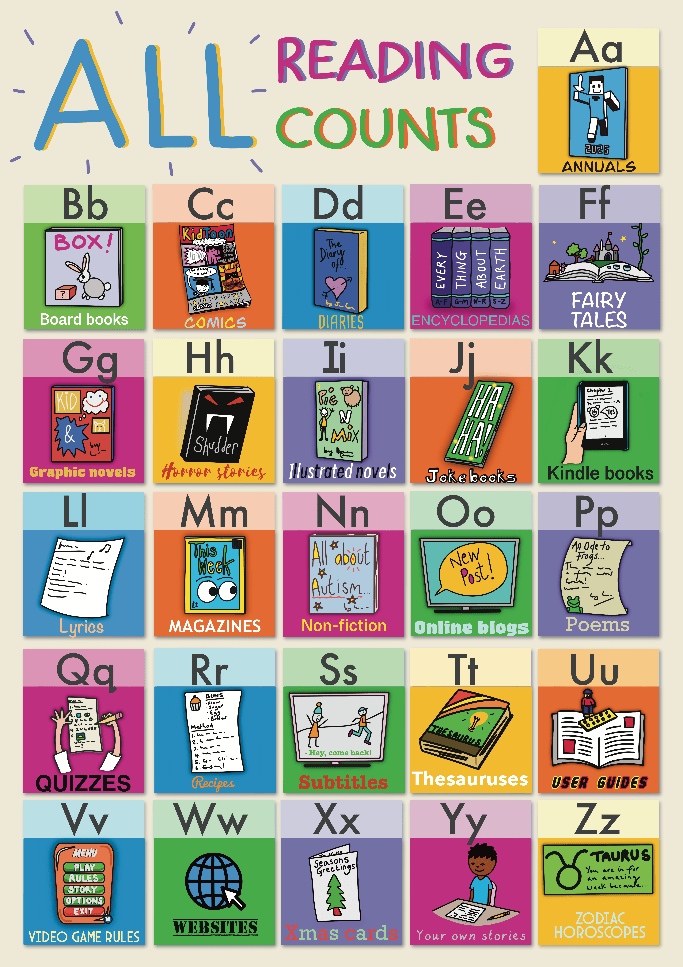
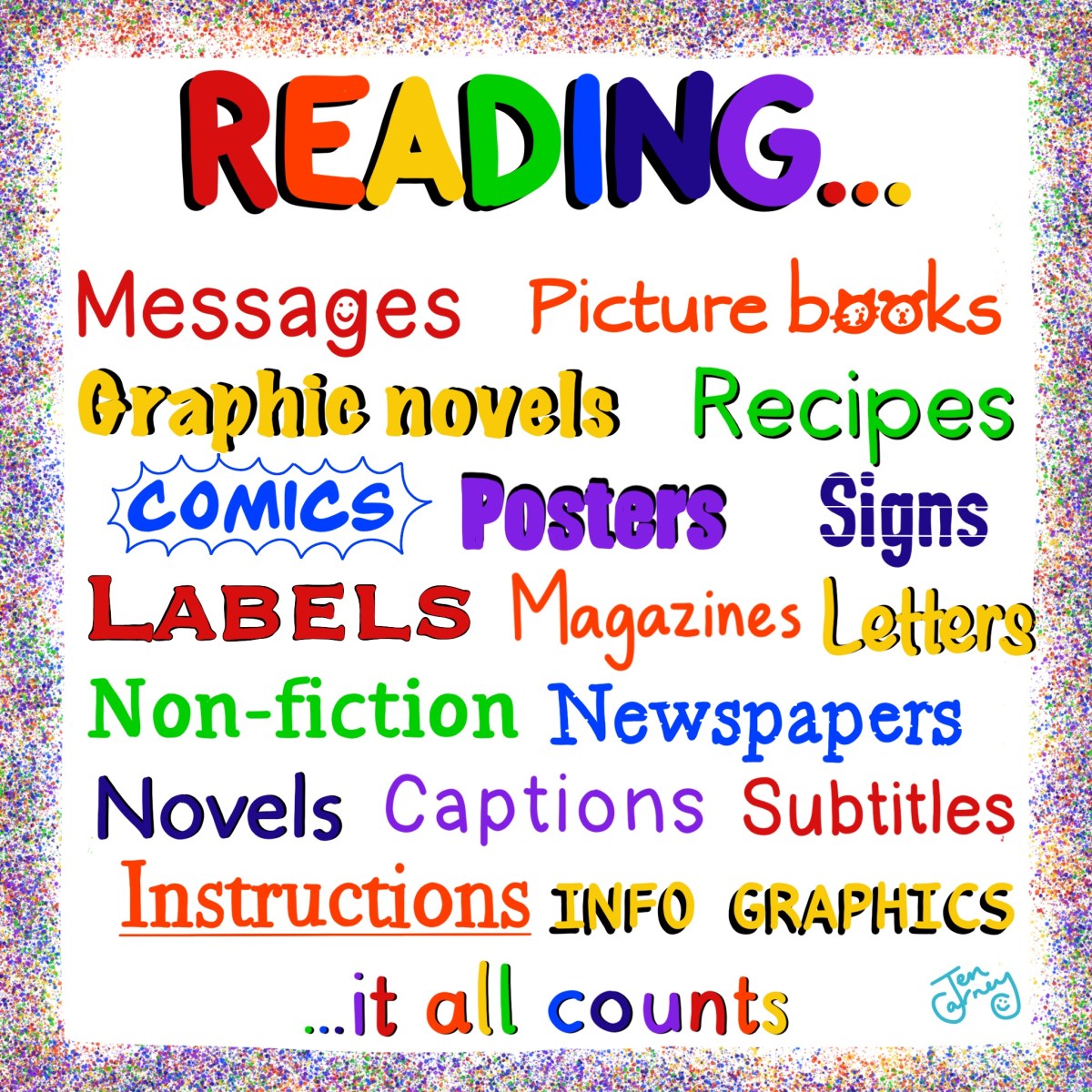
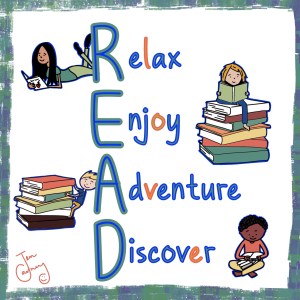
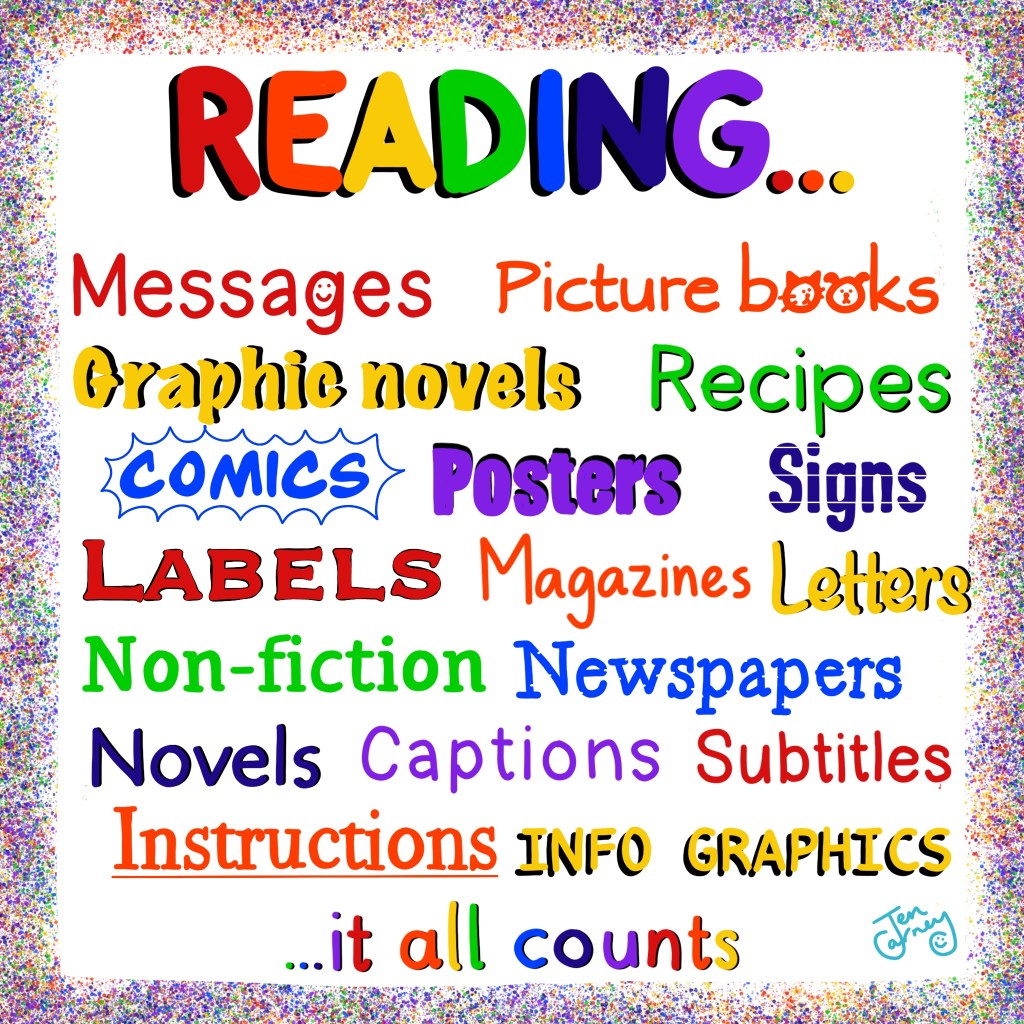
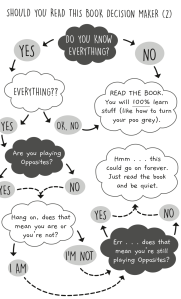
A .pdf of this poster is available to download for free from the resources page of my website
A message for parents/guardians and teachers this National Year of Reading
National Year of Reading Go All in Logo
In this National Year of Reading, our feeds are full of passionate posts about books. And as a children’s author, it will come as no surprise that I’m wholeheartedly in favour of children reading for pleasure.
Reading for pleasure helps children relax. It expands vocabulary. It strengthens empathy. It deepens understanding of the world. Long term, it supports mental wellbeing and academic achievement.
But here’s the honest part.
As a mum and a former Key Stage Two teacher, I know how hard it can be to nurture reading for pleasure as a sustained habit. I know how tempting it is to want a child to curl up and devour a whole, mind expanding novel. And I know how quickly that well intentioned hope can turn into pressure.
Most children do not fall in love with reading under pressure.
So, as we approach World Book Day, if you’re a parent or carer worrying that your child is not reading enough, take a breath and remember this:
All reading is reading. And all reading counts.
A .pdf of this poster is available to download for free from the resources page of my website
Books are wonderful. They offer immersion, depth, imagination, connection. But they are not the only gateway to reading fluency, comprehension and enjoyment.
The world is stitched together with words. Life requires us to read constantly and in many different forms.
Printed books. E books. Comics and graphic novels. Game instructions. Subtitles. Jokes. Billboards. Menus. Shampoo bottles.
It all counts.
Children become readers by reading. The habit builds through volume, variety and choice. What matters most is that they are engaging with words, making meaning, and discovering that reading is useful, empowering and sometimes even joyful.
Let them start where they are.
The rest will follow.
Resource
A free PDF poster of the “Alphabet of Reading” featured in this post is available to download from the resources page of my website. Please feel free to print and display it at home, in your classroom, or in your library.
In this blog, I recommend ten brilliant books that feature main characters with LGBT+ parents, and discuss why it’s important that all children get the opportunity to read them.
February is LGBT+ History Month – a time for commemorating the incredible things LGBT+ people have achieved throughout history, celebrating our present, and creating our future.
Over the past 50+ years Schools OUT have worked to #educateOUTprejudice and usualise LGBT+ lives, creating learning environments where all LGBT+ people feel safe, seen, and supported.
Like me, there are many authors working to normalise LGBT+ parents in children’s literature for the same reasons. Indeed, one of the main reasons I wrote my debut novel, The Accidental Diary Of B.U.G., was because my son was craving a funny, doodle-heavy book that featured a positive representation of a family like ours (2 mums, adopted children) – which I’ve previously blogged about here.
Positive Representation
It’s imperative that children with LGBT+ parents get opportunities to see a positive reflection of their very normal families in a good book for many reasons, not least of which is because representation is the key to successful reading for pleasure.
When a child sees themselves in a book, they feel validated, their self-confidence sky-rockets as they realise they’re not alone. Moreover, they’re more likely to read for pleasure and, if this habit is sustained, they’ll have better life chances, get better grades and report higher levels of wellbeing.
Understanding of difference
It’s of equal importance that all children have the opportunity to read great stories that, incidentally, contain families unlike their own. It helps them make sense of the world around them, boost their empathy levels and gain a deeper understanding of ‘different’ (and a recognition of the many similarities that unite humans).
Recommendations
That being said, here are ten recommendations from me for anyone seeking out fantastic books for your home, classroom or library, all of which feature main characters with LGBT+ parents.
Ten great children’s books featuring LGBT+ parents.
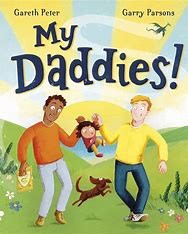
1. My Daddies by Gareth Peter and Garry Parsons
This heartfelt rhyming board book champions same-sex parents and the magic of reading between two dads and their adopted daughter.
PUBLISHER’S BLURB:
Set off on a series of incredible adventures with an adorable family as the stories they read burst into colourful life. Battle dragons, dodge deadly dinosaurs, zoom to the moon and explore the world in a hot air balloon, before winding down in a wonderfully cosy bedtime ending.
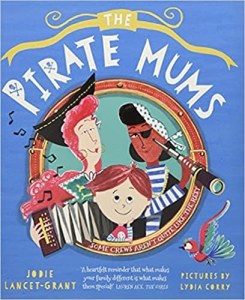
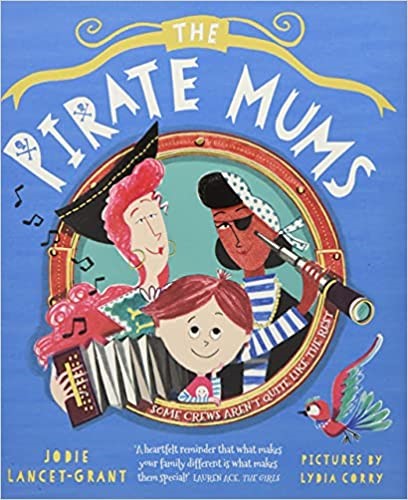
2. The Pirate Mums by Jodie Lancet-Grant and Lydia Corry
This swashbuckling adventurous picture book is perfect for introducing young children to the idea that families come in lots of shapes and sizes in a fun way.
PUBLISHER’S BLURB:
Billy’s family is not what you’d call ordinary. His mums won’t listen to NORMAL music. They love to sing sea shanties and dance jigs in the lounge. Their clothes are highly unusual, they have a rude parrot for a pet, and their taste in house design is, well . . . FISHY. Billy wishes his family could be more like everyone else’s, until an ocean adventure changes everything!
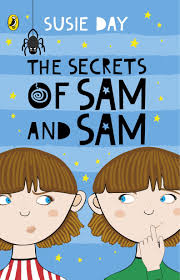
3. The Secrets of Sam and Sam by Susie Day
In this funny story about modern family life, the two Sams are m/f twins with the same mums and the same name, but very different personalities and lots of secrets.
PUBLISHER’S BLURB:
Sam likes being a twin. He likes having two mums. He likes cheese sandwiches and his dog and drawing comics with his friend Pea. He does not like humus – or heights . . .
His twin sister Sammie likes being a twin too. She knows that she’s perfect best friend material for somebody – the girls in her class just haven’t realised yet. And she knows that she’s the best Sam – Sam A.
Both Sam and Sammie – and everybody in their lives seems to be keeping secrets – which ones will come out?
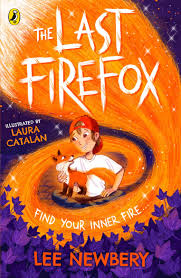
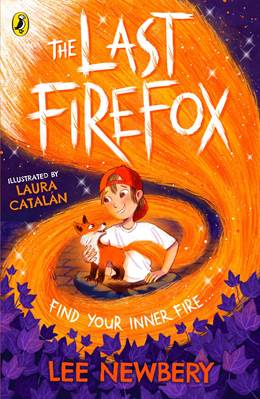
4. The Last Firefox (3 book series) by Lee Newbury
Two loving dads support their adopted son in this exciting fantasy adventure about a young boy who rescues a magical firefox cub.
PUBLISHER’S BLURB (for book 1):
Between bullies at school and changes at home, Charlie Challinor finds life a bit scary. And when he’s made guardian of a furry fox cub called Cadno, things get a whole lot scarier.
Because Cadno isn’t just any fox: he’s a firefox – the only one of his kind – and a sinister hunter from another world is on his trail.
Swept up into an unexpected adventure to protect his flammable friend, Charlie’s going to need to find the bravery he never thought he had, if he’s going to save the last firefox . . .
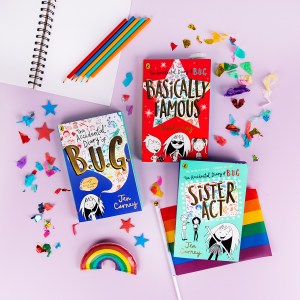
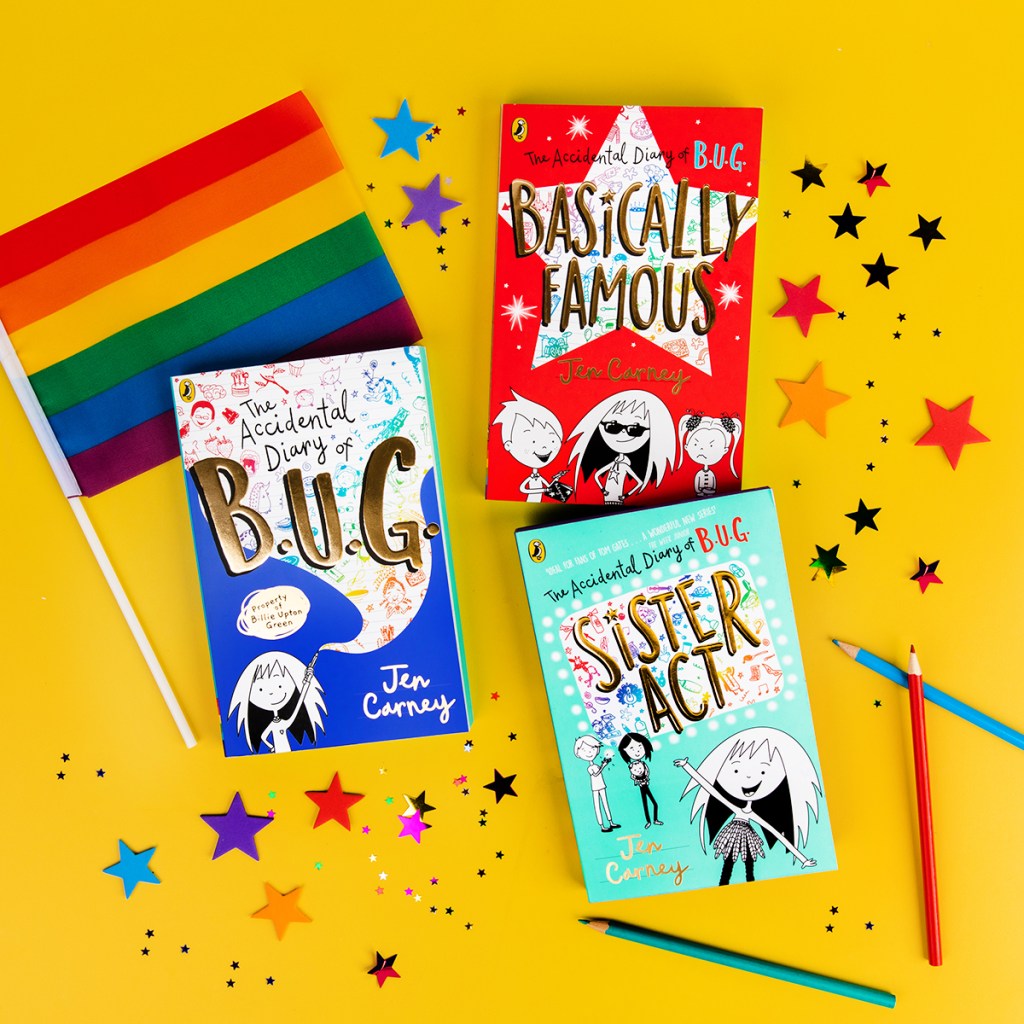
5. The Accidental Diary of B.U.G. (3 book series) by Jen Carney
This is a laugh-out-loud contemporary diary series rooted firmly in reality and narrated by the sparky Billie Upton Green who, incidentally, was adopted by her two mums when she was a baby.
PUBLISHER’S BLURB (for Book 1):
Meet Billie Upton Green and her VERY accidental diary – and don’t you DARE call her B.U.G!
Billie has taken the new girl at school under her wing. She’ll teach her the important stuff – Biscuit Laws, Mrs Patterson and of course where to sneakily eat a Jaffa Cake. She might even get invited to the EVENT OF THE YEAR (Billie’s mums’ are getting married).
But then suspicion sets in. The new girl seems VERY close to Billie’s best friend Layla.
And she knows a LOT about the big school heist – the theft of Mrs Robinson’s purse. But, Billie is on to her. Well, as long as Patrick doesn’t catch her eating biscuits first.
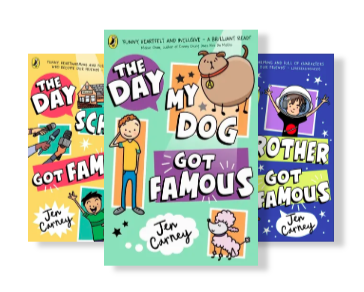
6.The Famous Series (3 books) by Jen Carney
The protagonist of these funny realistic adventure stories is a kind-hearted boy called Ferris who opens his home and his heart to the children his two mums foster for varying lengths of time.
PUBLISHER’S BLURB (for Book 1):
A few things you should know about Ferris Foster:
1. He’s the cartooning genius behind ASTOUNDOG (star of The Hoot, available exclusively in his school playground) 2. His best friend is his actual dog, Aldo who is anything but astounding 3. He’s had 13 foster brothers and 8 foster sisters and now he’s about to meet his new foster sister, Tia, for the first time 4. His NEMESIS is his totally annoying neighbour Destiny Dean!
When Destiny boasts about videos of her dog, Princess Foo-Foo, going viral, Ferris foolishly claims that Aldo can easily become a BIGGER internet star.
There’s just one problem: Aldo has about as much talent as a teaspoon.
Then Ferris and Tia accidentally film Aldo doing what looks like an amazing trick . . . will Aldo finally live up to the name of his comic book alter-ego and wow the world with his skills or is this about to be the biggest EPIC FAIL ever?
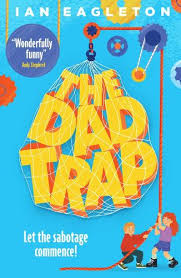
7. The Dad Trap by Ian Eagleton
Instant enemies William and Florence are horrified to find out their dads are dating each other – and are forced to work together to split them up!
PUBLISHER’S BLURB:
When William and Florence meet on the first day of Year Six, they instantly dislike each other.
William is impulsive, endlessly chatty and struggles in school. His home life is safe and predictable – just him and Dad, who adopted him as a solo parent – and that’s how William likes it.
Florence is sullen, cold, and everything seems to come easily to her. She’s moved after her parents’ divorce – but she’s convinced she won’t be staying long because they’ll definitely get back together…
But then Florence and William find out that their dads have started seeing each other. Now they must put their differences to one side. Because only if they work together might they stand a chance of splitting up their dads… Let the sabotage commence!
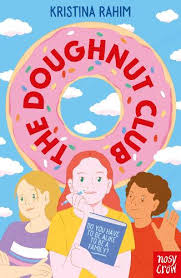
8. The Doughnut Club by Kristina Rahim
This is a heart-warming and relatable story about donor conceived siblings Quinn and Olly who have two mums, and sixteen donor siblings.
PUBLISHER’S BLURB:
Donor conceived Quinn loves her family, but she often feels the odd one out. Not only because she’s the only one with red hair and green eyes, but because she would rather be quietly drawing than surfing or rock-climbing or whatever mad activity her mums and brother Olly might like to do on holiday.
But when Quinn’s mums tell her and Olly they have sixteen donor siblings, Quinn is really excited. Maybe one of them will be more like her! The only problem is her parents want them to wait until they are older to contact anyone.
As she tries to secretly find out more, Quinn starts to lose sight of what’s really important – especially when she starts to believe her worst enemy could be one of her siblings!
Can Quinn find a way back to her family, whilst finding a way to tell them how she really feels?
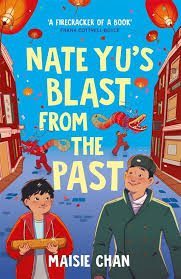
9. Nate Yu’s Blast From The Past by Maisie Chan
This is a captivating story steeped in history narrated by Nate (who has two mums) that explores identity, friendship, family and belonging.
PUBLISHER’S BLURB:
Nate Yu Riley loves three things: his Switch, his ant farm (especially Betsy, queen of the colony) and his family.
He’s not so sure about some other things, like moving to a big city, starting a new school, and his parents making him do Chinese stuff. They’re always trying to get him to embrace his heritage, but Nate can’t speak Chinese, and he doesn’t know anything about Chinese customs.
But when Nate comes across an old shell casing engraved with a Chinese dragon, he can’t stop thinking about it. And when he touches the shell, someone extraordinary appears. A ghost from long ago. Someone who needs Nate’s help – and Nate might just need his, too …
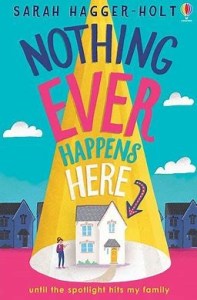
10. Nothing Ever Happens Here by Sarah Hagger-Holt
In this engaging and compassionately told story, Izzy’s family is under the spotlight when her dad comes out as Danielle, a trans woman.
PUBLISHER’S BLURB:
This is Littlehaven. Nothing ever happens here. Until the spotlight hits my family.
Izzy’s family is under the spotlight when her dad comes out as Danielle, a trans woman. Izzy is terrified her family will be torn apart. Will she lose her dad? Will her parents break up? And what will people at school say? Izzy’s always been shy, but now all eyes are on her. Can she face her fears, find her voice and stand up for what’s right?
1. Comedy provides a welcome escape from the chaos of the world
Who doesn’t sometimes just need a good old belly laugh?
2. Humour helps children cope
These days, funny books for children are way more than fart jokes and toilet humour. They often carry profound and deep messages, introduce young readers to meaningful or sensitive topics, and help them to navigate difficult situations.
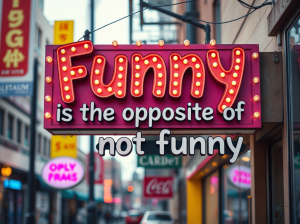
As many writers of funny books might tell you (and, yes, I am one of them), ‘funny’ is the opposite of ‘not funny’, not of ‘serious’.
In other words, something can be both funny and serious at the same time.
Without doubt, it is the author building trust with a reader through humour that allows for exploration of more sensitive issues.
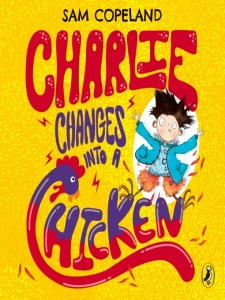
In the hilarious book, Charlie Turns Into A Chicken, by Sam Copeland, Charlie turns into different animals when he’s feeling anxious. And one of his main anxieties comes from the fact that his brother has cancer.
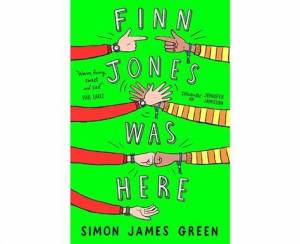
In Finn Jones was Here, by the talented writer, Simon James Green, themes of grief and death are explored through humour.
3. Laughter really can be the best medicine
A good old giggle can help counteract feelings of anxiety in children. Don’t just take my word for it, listen to scientific fact:
Laughing produces endorphins. These ‘happy hormones’ promote a sense of well-being and help relieve stress. Similarly, when we smile, levels cortisol (a stress hormone) are reduced.
So, reading a book that makes you smile or laugh, is truly beneficial for emotional well-being.
4. Sharing funny stories improves human connections
Whether through a shared read in class, or a bedtime story at home, when you laugh together, you bond better. Bonding over laughter develops trust which leads to open communication.
Reading a funny book can break down barriers and open up conversations. Once at ease, children speak more easily about sensitive topics.
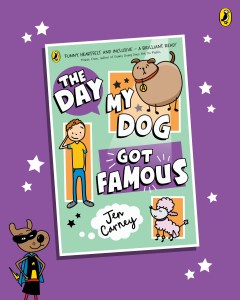
A teacher once contacted me to tell me that reading The Day My Dog Got Famousas a class reader had led to a brilliant discussion about different kinds of families, led by a child who’d lived with a foster family for a while before being adopted by two mums, just like Ferris’s.
PS the endorphins produced through laughter also promote better sleep! Winner winner.
5. Funny books can be empowering and reassuring
Humour can help children feel more comfortable, face fears or try something new. Seeing characters slip up, get into muddles and experience similar anxieties to their own can be reassuring.
Learning to laugh at yourself is a great life skill.
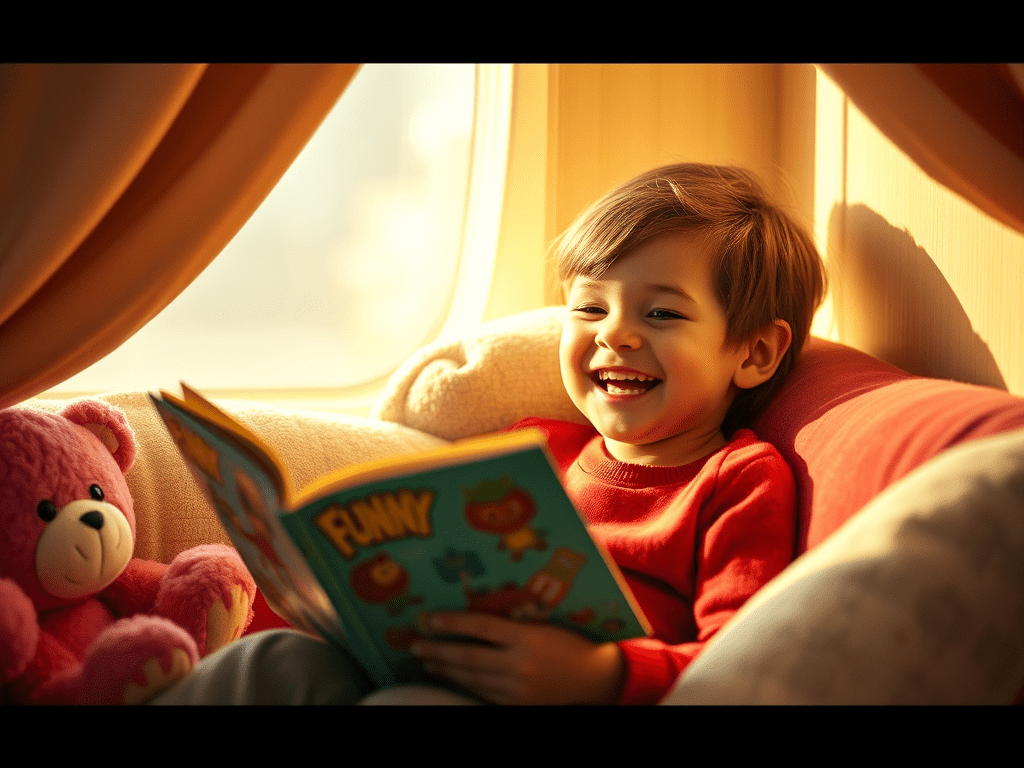
6. Funny books have the power to help children fall in love with reading
If a child associates reading with laughter and fun, they will have more chance of falling in love with reading.
Finding a funny book that hooks a child will entice them to read the whole series. Wimpy Kid, Loki, Dog Man – all very funny book series that have made children into readers.
PS Finding books that help children to read for pure joy is vital given that ‘reading for pleasure’ in childhood is evidenced to increase a child’s likelihood of achieving their potential in life.
7. Some funny novels have the power to compete with screens
The pay-off of a good laugh can be attractive enough to take a child away from a screen!
I’ll never forget the message I got from a parent who told me her son had CHOSEN to read Basically Famous instead of going on his PlayStation one evening.
And my own daughter will drop everything if there’s a new Lottie Brooks book out.
Less screentime = better mental health, in my opinion.
8. Funny books are brilliant teaching tools
We tend to remember things that make us laugh, so funny stories are brilliant for enhancing comprehension skills.
Funny books often contain moral dilemmas, so they improve social and emotional skills, and promote good decision making.
Puns, alliteration, word play, amusing similes…funny books contain them all, helping children to understand nuances of language.
In The Accidental Diary of B.U.G., through masses of belly laughs, children are introduced to same-sex parenting and adoption – an excellent resource for PSHE/RSE lessons in primary schools when learning about different families.
I’d love to hear your thoughts. Do you have any other compelling arguments as to why children should read funny books?
Many of us are aware that children who read for pleasure are more likely to be happier, have better mental well-being, achieve their potential academically, and develop skills like empathy and creativity. (If you’re interested, there’s more about this here on the Literacy Trust’s website.)
But what can YOU do to help your child LOVE reading?
How can you help your child see reading as a pleasure rather than a chore?
What can you do if your child insists they JUST DON’T LIKE reading?
Here are my top ten tips, drawn from experience as a mum, a children’s author-illustrator, a former leader of parent/carer baby/toddler story sessions, and an ex-KS2 teacher:
1. Start early
Introduce books when your child is a tiny baby, and make time every single day to share books with pictures.
As well as helping your baby to hear the rhythm of language, and develop speaking and listening skills, reading to your baby is a brilliant way to give them comfort, attention, stimulation and happiness. It also starts them on their journey to becoming a reader.
2. Establish reading as a habit
As your child becomes a toddler, keep reading aloud to them regularly. If you can, visit a library at least once a fortnight and borrow a wide selection of books. Most libraries allow you to borrow 20 books at a time for free! Pop along to story sessions and let your toddler see their peers enjoying books. For reading to become a loved habit, repetition is the key.
3. Extend the reading fun
Make-up (or Google) creative activities based around a book your child has enjoyed.
As a leader of community book-based toddler sessions, I found that arts and crafts, physical activities and games helped to maintain a love of books.
Here are six easy ideas to get you going:
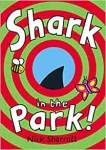
Make the telescope from Nick Sharratt’s There’s A Shark In The Park.
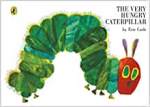
Potato print Eric Carle’s Very Hungry Caterpillar.
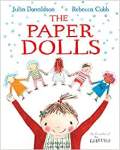
Make some Paper Dolls after reading Julia Donaldson and Rebecca Cobb’s beautiful book.
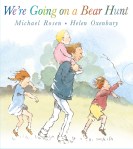
Go on an ACTUAL Bear Hunt after reading Michael Rosen and Helen Oxenbury’s well-loved rhyming book.
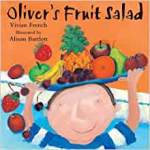
Make a fruit salad together after reading Oliver’s Fruit Salad by Vivien French and Alison Bartlett.
Have a game of Hide & Seek like Frank and Bert in Chris Naylor-Ballesteros’s brilliant book.
4. Don’t get too hung up on your child’s school reading scheme
As a mum, I know this one well!
When your child starts school, if they ever appear reluctant to engage with their levelled reading scheme book, why not try to de-stress the whole ‘let me listen to you read’ situation by…
MODELLING (aka YOU read the book)
This approach, particularly if you can get your child to follow the text as you read, has huge benefits (and it’s certainly better than an argument/meltdown). You could even make purposeful errors. Not just for them to correct, but to show you’re not perfect either
TAKING TURNS
Start with a word each, then a sentence each, progress to a paragraph each. Try taking turns where one of you only has to read the dialogue. Eventually, take turns reading a page each. Always pile on the praise.
EMBRACING YOUR SILLY
Silly voices and different accents always go down well, but anything goes with this one as long as some reading happens! Can you read this while standing on your head? Try reading this sentence backwards.
RELAXING school’s ‘RULES’
Forego reading scheme books now and then in favour of visiting the library, buying a comic/magazine to share, or introducing your child to a funny book you know will make them laugh (This was a game-changer for us – I’ve blogged about it here). Remember, variety is the spice of life and ALL READING COUNTS!
5. Let children choose their own books
I’m a firm believer in free choice when it comes to books.
So what if your child chooses a book that’s too hard for them? You can read it to them.
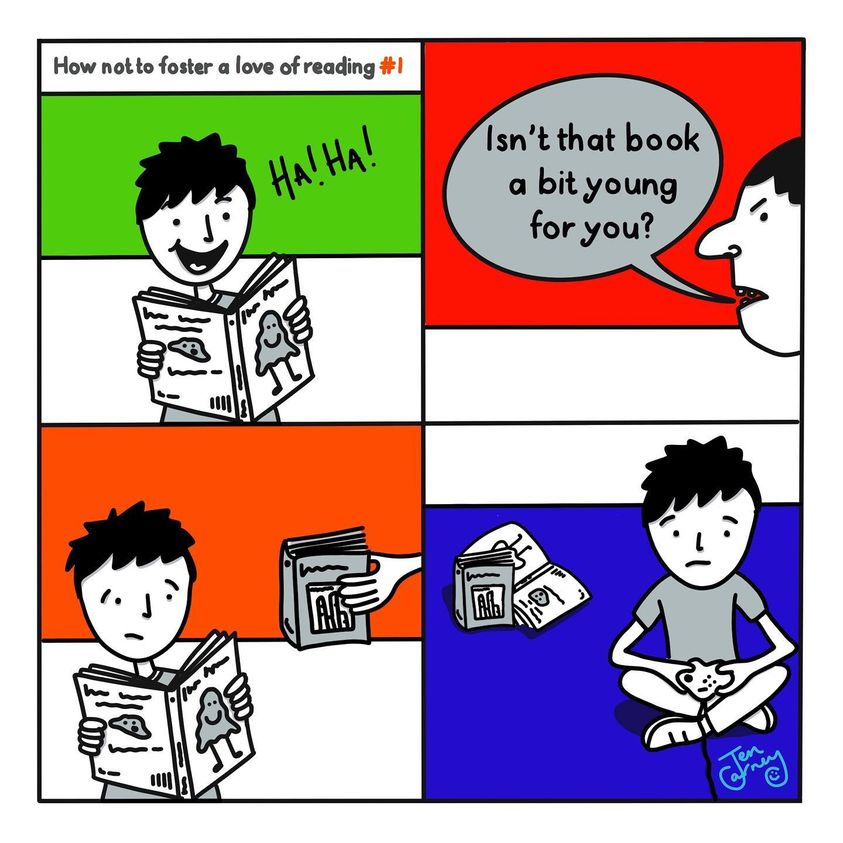
It doesn’t matter one iota if your child keeps choosing the same book, or the same author, or keeps picking books you believe are ‘too young’ or ‘too silly’ for them. Reading for pleasure is about free choice and enjoyment. Once a child develops a love for reading, I guarantee they’ll widen their preferences.
6. Find books that represent your child
Representation is a key factor in a child’s reading for pleasure journey.When a child sees themselves in a book (situations, families, heritage, appearances, identities etc.) they feel validated, and their self-confidence sky-rockets as they realise they’re not alone.
Find books your child can relate to and give them the opportunity to read them. (I’ve blogged about this in relation to rainbow families previously.)
7. Engage in Bookish chatter
Talk to your child about books and what they’re about. Ask your child what they did/didn’t like about a book. Let them speak freely so you get a real sense of what kind of books they are enjoying. Ask your child what they’d really love to read a story about, then research if one exists. (Twitter is a great tool for getting answers and recommendations.)
8. Find books that link to your child’s interests and hobbies
Whether non-fiction or a brilliant story, a child who loves football but hates reading, is more likely to read a book about football than a science-fiction book about a time-travelling porcupine.
If your child professes to dislike reading, but loves Minecraft or Lego or Roblox, find a book that aligns with their passion.
A child in a school I visited as an author recently spoke with passion about a book about F1 cars. Admittedly, he loved the pictures, but he was reading plenty of words too. And, importantly, enjoying reading.
9. When you know your child is capable of reading independently, don’t stop reading aloud to them
Every child is, of course, different. But, for as long as they’ll let you, read aloud to them at bedtime. This is your opportunity to introduce different genres, start conversations, laugh, cry, hide under the covers together! It won’t last forever, so my advice is to do it for as long as they’ll let you.
10. Be a reading role model
Visibly read for pleasure yourself. Not just at night in bed where no one knows you’re doing it.
And, to finish, four, ‘PLEASE DON’TS’ from me:
To avoid shattering confidence, please don’t tell your child they are ‘too old’ for a book.
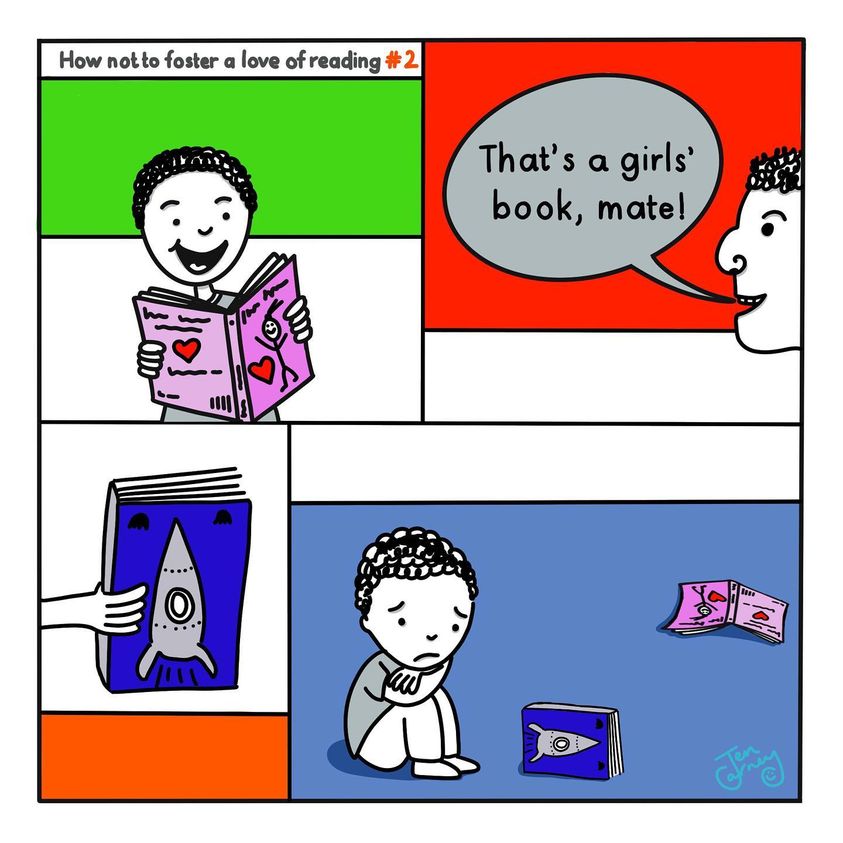
Whatever your personal thoughts, please don’t tell your child they’ve chosen a girls’/boys’ book.
When things get stressful (and I say this with particular regard to school reading scheme books) please don’t pile on the pressure or lose your temper.
However hard it feels, please don’t give up. If you’re reading this blog, you’re obviously doing your best and that’s all you can do.
It’s no secret that I’m passionate about the representation of rainbow families in children’s books. Indeed, a conversation with my son about the lack of positive representation (particularly in funny books) was my starting point for The Accidental Diary of B.U.G. series which I’ve previously blogged about here.
In my opinion, the answer to this question is:
A. to give children with two mums or two dads the choice to read a book that reflects their reality
and
B. to help children from more traditional family units to broaden their understanding of the world.
But why?
According to the Centre for Literacy in Primary Education’s ‘Reflecting Realities’ report (2020), representation is the key to successful reading for pleasure (another of my passions).
When a child sees themselves in a book, they feel validated, their self-confidence sky-rockets as they realise they’re not alone. Moreover, they’re more likely to read for pleasure and, if this habit is sustained, they’ll have better life chances, get better grades and report higher levels of wellbeing (OECD).
So given that in 2019 (according the ONS) there were 212,000 same sex families in the UK (and three years on, this figure will surely be greater), representing rainbow families is key to reading for pleasure for a large number of children.
That’s the ‘mirror’ element of reading.
But reading about people who are different to you, is of equal importance. This is where ‘windows’ come in.
To be able to read about life from another person’s perspective, helps children to make sense of the world around them. When a reader from a family with a mum and a dad reads a book that contains a rainbow family, they learn to empathise and accept. Essential conversations are sparked which can often lead to a deeper understanding of ‘different’ and a celebration of the many similarities that unite humans.
So, in summary, from picture books for babes in arms, right through to longer reads for older children, books have a huge role to play in helping youngsters to understand our world. Whether that’s to boost an individual’s self-esteem, to help nurture empathy for different, or just to cement the fact that all family units, whatever they look like, are valid, worth writing about, normal.
Can you recommend any great children’s books that contain positive representation of same sex parents?
Yes! BookTrust has some marvellous suggestions on these pages:
My Daddies written by Gareth Peter, illustrated by Garry Parsons – a rhyming picture book adventure that includes a celebration of adoption and is perfect for introducing children to a family with two loving fathers.
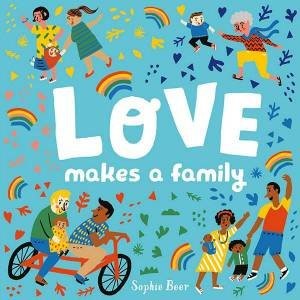
Love Makes a Familywritten and illustrated by Sophie Beer – a board book depicting a wide range of families and what they may typically do on a daily basis. I love this book’s main message: the one thing that makes every family is love.
The Pirate Mumswritten by Jodie Lancet Grant, illustrated by Lydia Corry – an adventure picture book that helps children to embrace uniqueness – whether that’s because you have two mums, or that your parents are pirates!
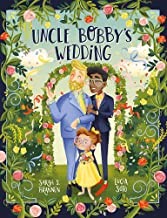
Uncle Bobby’s Weddingwritten by Sarah Brannen, illustrated by Lucia Soto – an uplifting celebration of love in all its forms. I vividly remember my nephew worrying I might not have time to play when I told him I was getting married!
The Accidental Diary of B.U.G.(3 books) written and illustrated by me! – think Wimpy Kids meets Tom Gates, but with a witty female protagonist who, incidentally, has two mums and was adopted as a baby.
The Last Firefox written by Lee Newbery, illustrated by Laura Catalan – a fantasy tale about finding your own courage with lovely representation of an adoptive family with same-sex parents (two dads).
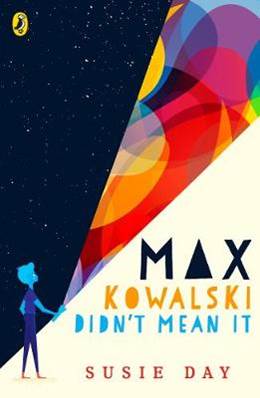
Max Kowalski Didn’t Mean It by Susie Day – an exploration of masculinity told via an exciting adventure and including a family headed up by two fathers.
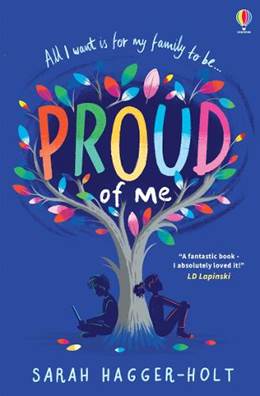
Proud of Me by Sarah Hagger-Holt – a lovely coming of age story with multiple LGBT themes, told from the point of view of twelve year old siblings Josh and Becky who have two mums.
I’ve received many marvellous messages from parents, guardians and teachers thanking me for igniting a love of reading in their reluctant readers. Such correspondence delights me, because it was my own son’s MAHOOSIVE reluctance to read that inspired the format and content of The Accidental Diary of B.U.G. series.
So, in brief, here are five reasons I think my books appeal to children usually disinclined to choose to read for pleasure:
Early attention-grabbing content
Short chapters easily finished in one sitting
Dynamic content
Laughter and jokes
A relatable (and inspirational) protagonist
Allow me to expand…
Early, attention-grabbing content
The first few pages of a book are important for all readers. For children disinclined to read for pleasure, grabbing and maintaining their interest in the initial pages is, perhaps, vital.
Will I read the rest of this book?
Where children who love to read might enjoy an atmospheric, descriptive build up, reluctant readers (my own son being a prime example of this) are inclined to abandon perfectly wonderful books if nothing has piqued their interest by page four.
Other people have commented on this aspect of my series:
“My 7-year-old is a hard sell… books have to grab him immediately. We could hear him laughing while he was in bed reading this. It’s a triumph. Thank you”
Parent
“I have an 8-year-old reluctant reader… hadn’t read anything willingly for well over a year… from page 1 I could see her interest piqued… Tonight when I finished reading to her, she took the book from me and read a couple of pages to herself whilst giggling at the content…It’s early days but you may just have got my lovely girl’s reading mojo back on track.”
Parent
2. Short chapters easily finished in one sitting
The feeling of accomplishment should not be under-estimated. I’ve never come across a child who wasn’t thrilled to have found a book they actually enjoyed reading. And a proudly announced, ‘I’ve finished A WHOLE CHAPTER!’ is a moment to be celebrated.
My daughter usually has to be bribed to read. The short chapters kept her going. She read this whole book without complaint and immediately asked me to order the sequel. Thank you.”
Parent
“Hasen has finished your book and absolutely LOVED it! Thank you so much for writing a book which has ignited a love for reading in some of my reluctant readers.”
KS2 Teacher
3. Dynamic content
For many so-called reluctant readers I have taught over the years, a full page of text was a real turn-off. Even if the story was gripping, even if I read the opening chapter to pique interest in a book I knew they could read and I thought they’d enjoy, some children (especially those who were also struggling readers) just felt too overwhelmed by dense paragraphs of words page after page, so gave up.
The Accidental Diary of B.U.G. series is purposefully packed with doodles, interactive pages and activity ideas – often viewed by reluctant readers as a nice little reading break despite the reading skills these parts of the story involve (Shhh)!
Lots of reading here!
“The Accidental Diary of B.U.G. is immense fun and is the first book I have read in a single sitting in a long time!”
Louie Stowell, author of many great books for children including The Dragon in the Library and Loki
4. LAUGHTER AND JOKES
Through funny speech bubbles, daft doodles, blatant jokes and the odd amusing hyperbole, The Accidental Diary of B.U.G. series is intended to make children laugh. In my experience, the LOL-factor can be a magnet for many reluctant readers as books are often competing with games consoles/phones. Certainly, my son always had a better entertainment option unless it was bedtime. As a parent to three would-be screen-addicts, these recent tweet made me VERY happy:
“Awab is really enjoying his new book and was very proud of himself this morning. ‘Miss, I am already on page 111 and I didn’t even go on my PlayStation last night!’”
“Daughter got a copy for her birthday and hasn’t put it down since! Even choosing book over Nintendo she is loving it so much 😊”
“Jen Carney writes family life with warmth, nuance and a phenomenal eye for detail. Plus, she knows how to make kids laugh . . . and I mean totally unreserved roll-on-the-floor belly laugh. Billie Upton Green is a firm favourite in our house.
Emma Mylrea, author of Curse of the Dearmad
5. A relatable (and inspirational) protagonist
B.U.G.
Many reluctant readers, in my experience, enjoy reading about someone who’s a bit like them.
Billie Upton Green is a regular, present-day ten-year-old – no angel, but likeable. She lives with her family, she goes to school, she watches TV, she plays with her friends, she has disagreements, she visits relatives, she bemoans rules and obligations, she marvels at the extraordinary, and she’d much rather be doodling than writing. She’s not afraid to laugh at herself and the things she struggles with (namely spellings) and she’s very matter of fact about life. Writing about the everyday with no filter, and in a witty but easy to understand manner, she’s a character that proves to reluctant or struggling readers that everyone is smart in their own way.
“The character of Billie is wonderfully relatable, as well as likeable and funny. And Carney has done well to incorporate topical subjects, like diversity, same sex parent adoption and so on. This is life as youngsters know it today, and it’s great to see such issues treated with both humour and respect.”
Amazon reviewer
Class workshop feedback:
“I liked how she made spelling mistakes and drew things she couldn’t spell.”
Abominable
“I’m going to invent my own biscuit laws later.”
The Cream-Filled Commandment
I dearly hope that one of my books might begin a reluctant readers’ ‘reading for pleasure’ journey because it was these kinds of books that turned my book-loathing son into someone who chose to read for pleasure. (Said son is now sixteen and reads a wide range of books, his current favourite genre being dystopian fantasy. So, to anyone currently struggling with a reluctant reader, my advice would be to pile them with books until they find their pleasure, then wait – they’ll branch out in their own time.)
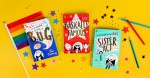
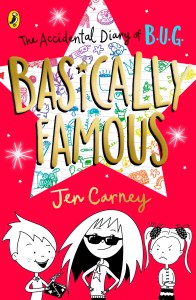
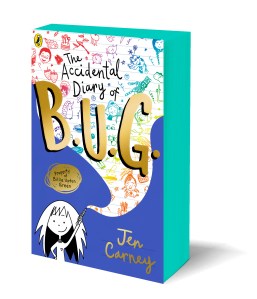
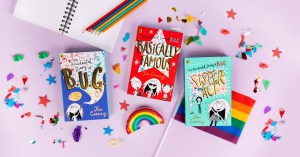
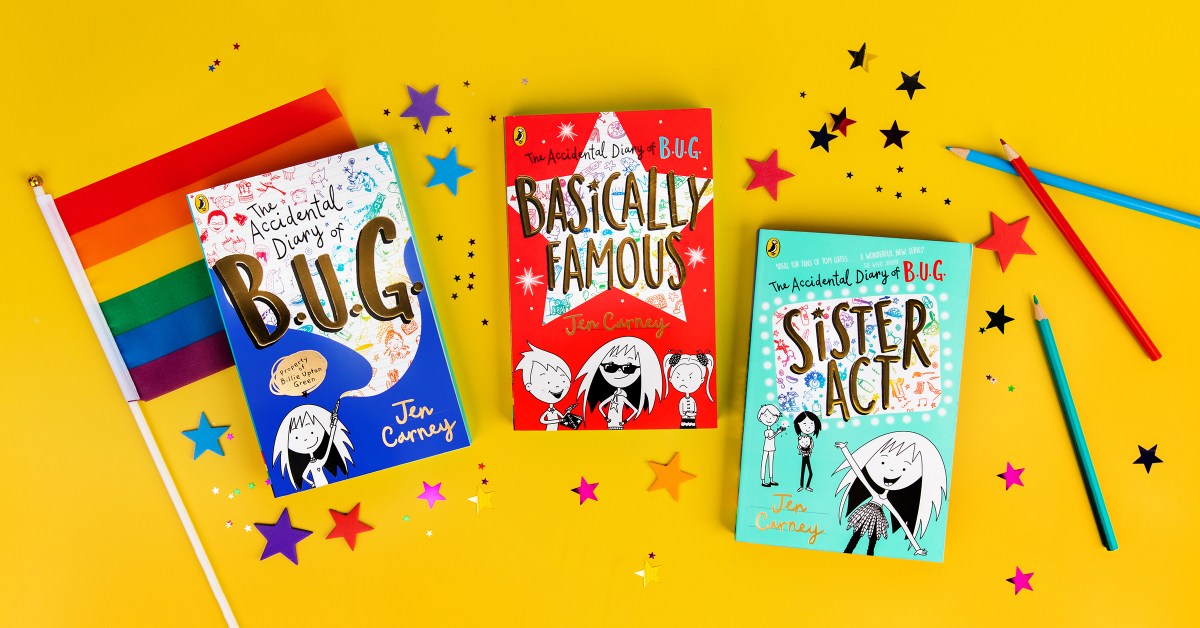
The Accidental Diary of B.U.G. and Basically Famous are available to buy now. They’re recommended for readers aged 7+ (note that plus – it’s very important, my son was eleven when he was reading books like this). If they hook your reader, the third in the series, Sister Act will be published on 3rd February 2022.
PS In addition to all of the reluctant reader hooks mentioned above, all the books in The Accidental Diary of B.U.G. series carry important underlying messages surrounding being proud of who you are, accepting differences and navigating friendships.
As both a primary school teacher and a mum, I’ve witnessed first-hand the positive impact reading for pleasure has on children’s well-being and achievement. I wasn’t surprised, therefore, to discover evidence in this report, produced today by the National Literacy Trust, that children who read for pleasurehave better life chances, get better grades and report higher levels of wellbeing.
What I was shocked by, however, was the fact that in many areas of the UK, one in four primary schools don’t have a school library, and that two in five lack the budget to buy new books.
How do the children at these schools access books they can read for pleasure?
And I mean properly read for the sheer pleasure of getting lost in an adventure, being transported to another world, connecting with a character so much that they can’t wait to discover what happens next. Where do these children find books they can see themselves in? How do they experience the real magic of reading that is lacking from many prescribed reading schemes?
Having thought about this, I’ve come up with the following possibilities:
Their local public library
BUT not all neighbourhoods have a library. And, even if they do, not all parents/guardians choose to take advantage of these wonderful free resources staffed by knowledgeable professionals on hand to help. (I take one or more of my children to our local library weekly, but we’re often the only patrons there.)
Their parents/guardians buy them books
BUT not many families can afford to do this regularly, especially those living in the areas cited as not having a school library.
Their teachers buy new books with their own personal funds.
As wonderful as regularly forking out for books for your pupils is (I’ve been there), this is not a solution for the masses.
So I guess the question becomes, if a school doesn’t have a well-stocked library, curated by an educator who is afforded the time to keep abreast of new, diverse, inclusive, exciting books, where do children whose parents/guardians can’t/don’t take advantage of public libraries, and can’t afford to buy books, get the opportunity to experience the pleasure of reading?
Nowhere.
In hope, the report published today will highlight to the government the long-term benefits of proper investment in primary school libraries so that ALL children have the opportunity to reap the benefits of reading for pleasure.
PS If you’re reading this and you work at a school in the Black Country, Newham, Barking, Dagenham, Thurrock, Basildon, Harlow, Braintree Stockton-on-Tees, Gateshead, Redcar, Cleveland, Swindon or Blackpool, do check out this offer from my publisher, Puffin, who are currently recruiting schools for their World of Stories programme which equips schools with resources to help champion reading for pleasure (including 500 free books, training for library co-ordinators and National Literacy Trust membership).











 Jen Carney