Categories
Engaging reluctant readers Reading for pleasure Uncategorized

The Hidden Benefits of Funny Books for Kids

Why should children read funny books?

1. Comedy provides a welcome escape from the chaos of the world
Who doesn’t sometimes just need a good old belly laugh?

2. Humour helps children cope

These days, funny books for children are way more than fart jokes and toilet humour. They often carry profound and deep messages, introduce young readers to meaningful or sensitive topics, and help them to navigate difficult situations.

As many writers of funny books might tell you (and, yes, I am one of them), ‘funny’ is the opposite of ‘not funny’, not of ‘serious’.
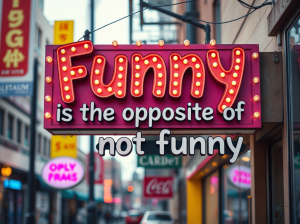
In other words, something can be both funny and serious at the same time. 

Without doubt, it is the author building trust with a reader through humour that allows for exploration of more sensitive issues.

In the hilarious book, Charlie Turns Into A Chicken, by Sam Copeland, Charlie turns into different animals when he’s feeling anxious. And one of his main anxieties comes from the fact that his brother has cancer.
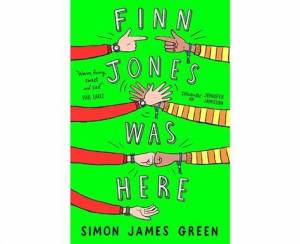
In Finn Jones was Here, by the talented writer, Simon James Green, themes of grief and death are explored through humour.
3. Laughter really can be the best medicine

A good old giggle can help counteract feelings of anxiety in children. Don’t just take my word for it, listen to scientific fact: 

Laughing produces endorphins. These ‘happy hormones’ promote a sense of well-being and help relieve stress. Similarly, when we smile, levels cortisol (a stress hormone) are reduced. 

So, reading a book that makes you smile or laugh, is truly beneficial for emotional well-being.

4. Sharing funny stories improves human connections

Whether through a shared read in class, or a bedtime story at home, when you laugh together, you bond better. Bonding over laughter develops trust which leads to open communication.

Reading a funny book can break down barriers and open up conversations. Once at ease, children speak more easily about sensitive topics.

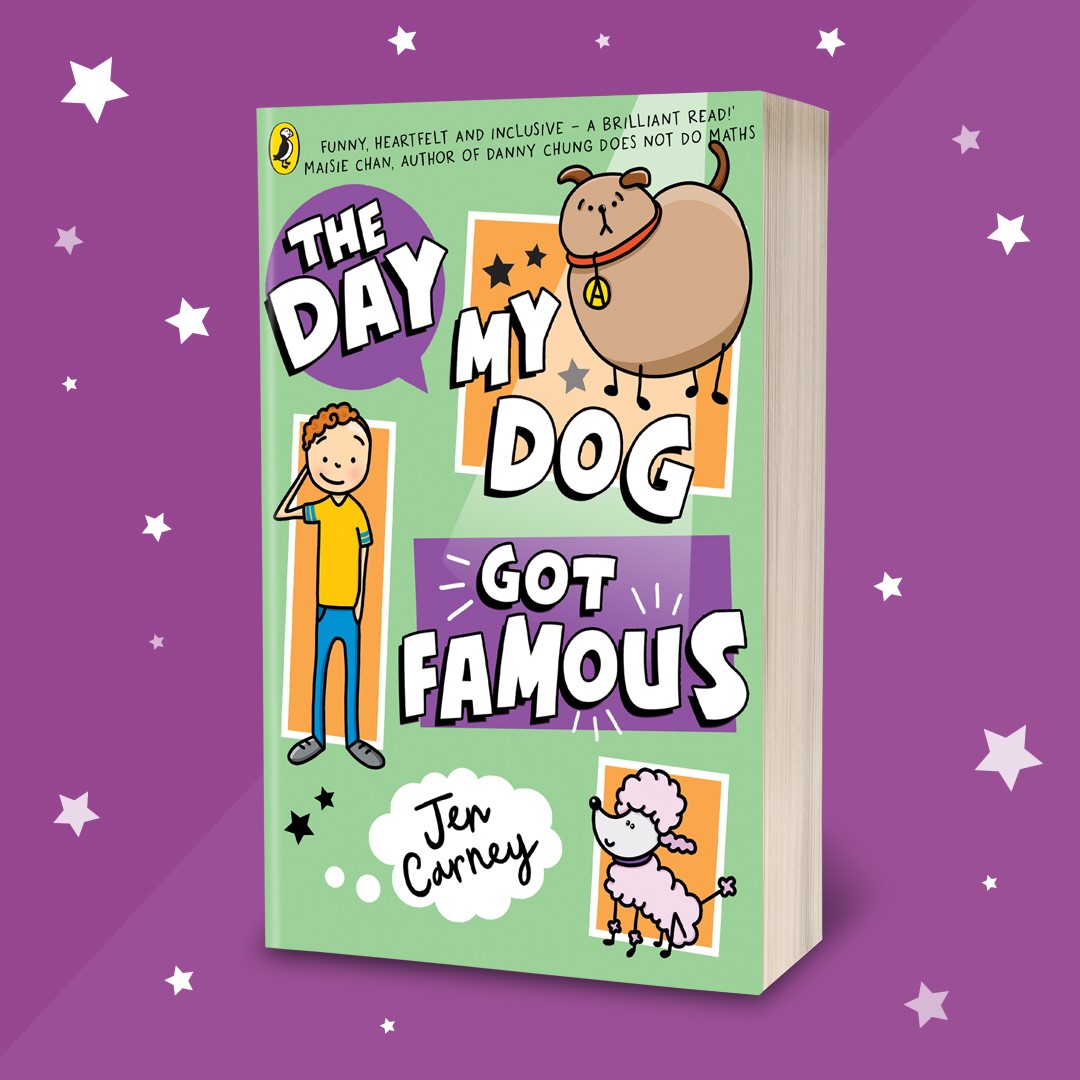
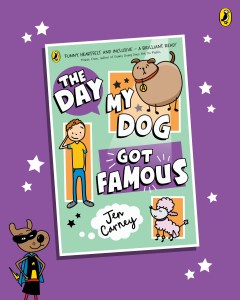
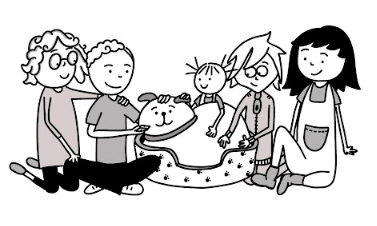
A teacher once contacted me to tell me that reading The Day My Dog Got Famous as a class reader had led to a brilliant discussion about different kinds of families, led by a child who’d lived with a foster family for a while before being adopted by two mums, just like Ferris’s.
PS the endorphins produced through laughter also promote better sleep! Winner winner.
5. Funny books can be empowering and reassuring

Humour can help children feel more comfortable, face fears or try something new. Seeing characters slip up, get into muddles and experience similar anxieties to their own can be reassuring.

Learning to laugh at yourself is a great life skill.

6. Funny books have the power to help children fall in love with reading

If a child associates reading with laughter and fun, they will have more chance of falling in love with reading.

Finding a funny book that hooks a child will entice them to read the whole series. Wimpy Kid, Loki, Dog Man – all very funny book series that have made children into readers.
PS Finding books that help children to read for pure joy is vital given that ‘reading for pleasure’ in childhood is evidenced to increase a child’s likelihood of achieving their potential in life.

7. Some funny novels have the power to compete with screens

The pay-off of a good laugh can be attractive enough to take a child away from a screen!

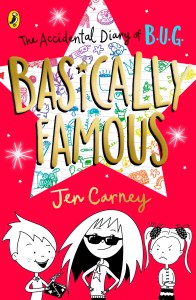
I’ll never forget the message I got from a parent who told me her son had CHOSEN to read Basically Famous instead of going on his PlayStation one evening.
And my own daughter will drop everything if there’s a new Lottie Brooks book out.

Less screentime = better mental health, in my opinion.

8. Funny books are brilliant teaching tools

We tend to remember things that make us laugh, so funny stories are brilliant for enhancing comprehension skills.

Funny books often contain moral dilemmas, so they improve social and emotional skills, and promote good decision making.

Puns, alliteration, word play, amusing similes…funny books contain them all, helping children to understand nuances of language.

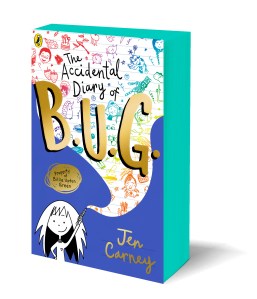
In The Accidental Diary of B.U.G., through masses of belly laughs, children are introduced to same-sex parenting and adoption – an excellent resource for PSHE/RSE lessons in primary schools when learning about different families.
I’d love to hear your thoughts. Do you have any other compelling arguments as to why children should read funny books?

Categories
fostering Representation Uncategorized

Why do you represent a foster family in The Day My Dog Got Famous?

It’s no secret that I’m passionate about the representation of different types of families in children’s books. Indeed, a conversation with my son about the lack of positive representation of children with same-sex parents in upbeat books was my starting point for my debut series, The Accidental Diary of B.U.G., which has been praised for its accessible, age-appropriate inclusion – shortlisted for the national Polari Prize and winner of the Sparks Children’s Book Award. (You can read about that conversation in this blog post.)

In my latest series, I’ve represented a foster family. Specifically, a blended foster family headed up by two mums.

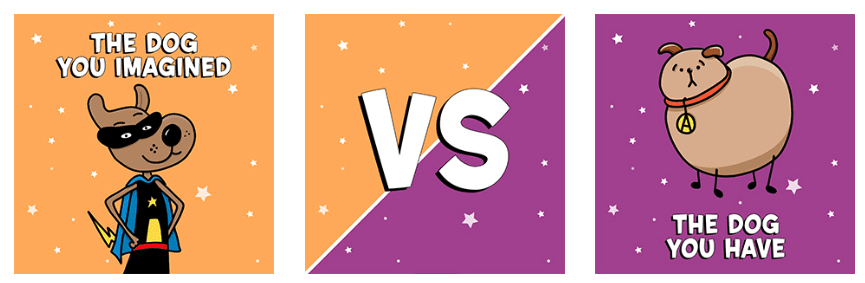
The series starts with The Day My Dog Got Famous which tells the story of Ferris (the mums’ birth child) and his mission (with the help of his newly-placed foster sister) to make his dozy dog more like the cartoon canine he draws for fun. Why? So he can beat his boastful next door neighbour and her uber-talented poodle in an online pet-popularity contest.

Teacher feedback: “The Day My Dog Got Famous doesn’t just show the wonder of dogs but presents a sensitive window into the life of a foster family, as well as the emotions of a young boy who has to deal with children coming in and out of his home for varying lengths of time.”

Real-Life Inspiration

I was inspired to write this series by my sister who, in addition to having four of her own children, has fostered for over 20 years. And by my nephews and niece who, like my protagonist, Ferris, have generously opened their lives and their hearts to welcome foster children into their home for various periods of time.

Through funny capers with dogs, cartoons and comic strips, The Day My Dog Got Famous explores some of the emotions experienced by birth children who are part of blended families: frustration, connection, love and loss.

Teacher feedback: “…not just a fabulous story but one that is highly inclusive and one that balances humour with heartache to absolute perfection.”

Representing Children in Foster Care

A mother through adoption myself, and a previous panel member for both fostering and adoption agencies, through the series I’ve also dipped into some of the reasons children can find themselves foster care, how they feel, and the repercussions that can ensue – all at a level that children will understand.

In book one,  The Day My Dog Got Famous, the family provides respite care for a child whose regular carer is in hospital.

In book twoThe Day My School Exploded, the family are fostering a child who has been removed from his mother and separated from his brother, and is soon going to be living with a relative.

Book three will focus on a child who is looked after under a Special Guardianship arrangement and comes to the Fosters (yes, the main family are called Foster as well as being foster carers!) for a respite placement.

All three books include a long-term foster child with additional needs to represent the sad fact that such children often remain in the care system for longer than their peers. (I’m an experienced parent to a wonderful child with special needs. Showing that children with additional needs are much more than just their difficulties was also important to me when writing this series.)

The message that family is often bigger than biology is seeded through the series.

Parent feedback: “Where the book tips the line to excellent is the touches of diversity and the truths of human life…Ferris having a ‘hard to place’ foster sister, and two mums, and what that impact that has. It looks at the how and who can be in care, for respite or permanent – and what that looks like for existing children.”

Why represent foster families in children’s books?

It’s always about mirrors and windows for me.

  1. REPRESENTATION – the mirror

Representation is the key to successful reading for pleasure – a well-known indicator of a child’s future life-chances and well-being.

In the UK alone, there are almost 54,000 foster families and approximately 70,000 foster children living with them.

These children deserve to see themselves in a funny book. As do the many birth children living in blended families.

2. EMPATHY – the window

Providing a sneak view into the life of someone else gives children with little (or no) experience of foster care the opportunity to learn about other children’s lives. This helps them to build empathy as they broaden their understanding of the world.


The Day My Dog Got Famous is out now and available via Amazon, Bookshop.org, independent bookshops, chain bookstores and libraries.

The Day My School Exploded will be released on 6th February 2025 and is available to pre-order now.

The third title will follow in February 2026.

Categories
book reviews

What teachers are saying about The Day My Dog Got Famous…

Mrs Sydney’s Famous World’s Smallest Library

A wonderful blend of traditional text and accompanying illustrations together with graphic novel-style pages, this is a book that is, like B. U. G., not just a fabulous story but one that is highly inclusive and one that balances humour with heartache to absolute perfection. 

Mrs Sydney, KS2 teacher

Check ‘Em Out Books

It’s such a treat to read – as well as comical illustrations, Jen’s writing is always so profound whilst making the reader snort!

Mr Griffiths, AHT and Y6 teacher
Categories
Engaging reluctant readers Reading for pleasure

Why do your books appeal to reluctant readers?

I’ve received many marvellous messages from parents, guardians and teachers thanking me for igniting a love of reading in their reluctant readers. Such correspondence delights me, because it was my own son’s MAHOOSIVE reluctance to read that inspired the format and content of The Accidental Diary of B.U.G. series.

So, in brief, here are five reasons I think my books appeal to children usually disinclined to choose to read for pleasure:

  1. Early attention-grabbing content
  2. Short chapters easily finished in one sitting
  3. Dynamic content
  4. Laughter and jokes
  5. A relatable (and inspirational) protagonist

Allow me to expand…

  1. Early, attention-grabbing content

The first few pages of a book are important for all readers. For children disinclined to read for pleasure, grabbing and maintaining their interest in the initial pages is, perhaps, vital.

Will I read the rest of this book?

Where children who love to read might enjoy an atmospheric, descriptive build up, reluctant readers (my own son being a prime example of this) are inclined to abandon perfectly wonderful books if nothing has piqued their interest by page four.

Other people have commented on this aspect of my series:

“My 7-year-old is a hard sell… books have to grab him immediately. We could hear him laughing while he was in bed reading this. It’s a triumph. Thank you”

Parent

“I have an 8-year-old reluctant reader… hadn’t read anything willingly for well over a year… from page 1 I could see her interest piqued… Tonight when I finished reading to her, she took the book from me and read a couple of pages to herself whilst giggling at the content…It’s early days but you may just have got my lovely girl’s reading mojo back on track.”

Parent

2. Short chapters easily finished in one sitting

The feeling of accomplishment should not be under-estimated. I’ve never come across a child who wasn’t thrilled to have found a book they actually enjoyed reading. And a proudly announced, ‘I’ve finished A WHOLE CHAPTER!’ is a moment to be celebrated.

My daughter usually has to be bribed to read. The short chapters kept her going. She read this whole book without complaint and immediately asked me to order the sequel. Thank you.”

Parent

“Hasen has finished your book and absolutely LOVED it! Thank you so much for writing a book which has ignited a love for reading in some of my reluctant readers.”

KS2 Teacher

3. Dynamic content

For many so-called reluctant readers I have taught over the years, a full page of text was a real turn-off. Even if the story was gripping, even if I read the opening chapter to pique interest in a book I knew they could read and I thought they’d enjoy, some children (especially those who were also struggling readers) just felt too overwhelmed by dense paragraphs of words page after page, so gave up.

The Accidental Diary of B.U.G. series is purposefully packed with doodles, interactive pages and activity ideas – often viewed by reluctant readers as a nice little reading break despite the reading skills these parts of the story involve (Shhh)!

Lots of reading here!

“The Accidental Diary of B.U.G. is immense fun and is the first book I have read in a single sitting in a long time!”

Louie Stowell, author of many great books for children including The Dragon in the Library and Loki

4. LAUGHTER AND JOKES

Through funny speech bubbles, daft doodles, blatant jokes and the odd amusing hyperbole, The Accidental Diary of B.U.G. series is intended to make children laugh. In my experience, the LOL-factor can be a magnet for many reluctant readers as books are often competing with games consoles/phones. Certainly, my son always had a better entertainment option unless it was bedtime. As a parent to three would-be screen-addicts, these recent tweet made me VERY happy:

“Awab is really enjoying his new book and was very proud of himself this morning. ‘Miss, I am already on page 111 and I didn’t even go on my PlayStation last night!’”

“Daughter got a copy for her birthday and hasn’t put it down since! Even choosing book over Nintendo she is loving it so much 😊

“Jen Carney writes family life with warmth, nuance and a phenomenal eye for detail. Plus, she knows how to make kids laugh . . . and I mean totally unreserved roll-on-the-floor belly laugh. Billie Upton Green is a firm favourite in our house.

Emma Mylrea, author of Curse of the Dearmad

5. A relatable (and inspirational) protagonist

B.U.G.

Many reluctant readers, in my experience, enjoy reading about someone who’s a bit like them.

Billie Upton Green is a regular, present-day ten-year-old – no angel, but likeable. She lives with her family, she goes to school, she watches TV, she plays with her friends, she has disagreements, she visits relatives, she bemoans rules and obligations, she marvels at the extraordinary, and she’d much rather be doodling than writing. She’s not afraid to laugh at herself and the things she struggles with (namely spellings) and she’s very matter of fact about life. Writing about the everyday with no filter, and in a witty but easy to understand manner, she’s a character that proves to reluctant or struggling readers that everyone is smart in their own way.

“The character of Billie is wonderfully relatable, as well as likeable and funny. And Carney has done well to incorporate topical subjects, like diversity, same sex parent adoption and so on. This is life as youngsters know it today, and it’s great to see such issues treated with both humour and respect.”

Amazon reviewer

Class workshop feedback:

“I liked how she made spelling mistakes and drew things she couldn’t spell.”

Abominable

“I’m going to invent my own biscuit laws later.”

The Cream-Filled Commandment

I dearly hope that one of my books might begin a reluctant readers’ ‘reading for pleasure’ journey because it was these kinds of books that turned my book-loathing son into someone who chose to read for pleasure. (Said son is now sixteen and reads a wide range of books, his current favourite genre being dystopian fantasy. So, to anyone currently struggling with a reluctant reader, my advice would be to pile them with books until they find their pleasure, then wait – they’ll branch out in their own time.)

The Accidental Diary of B.U.G. and Basically Famous are available to buy now. They’re recommended for readers aged 7+ (note that plus – it’s very important, my son was eleven when he was reading books like this). If they hook your reader, the third in the series, Sister Act will be published on 3rd February 2022.

PS In addition to all of the reluctant reader hooks mentioned above, all the books in The Accidental Diary of B.U.G. series carry important underlying messages surrounding being proud of who you are, accepting differences and navigating friendships.